Fragmentation and Arrangement
Texts are “distributed and conditional documents” and “we have to shift outside our modern or western frames to grasp an alternative conception—in which a book is conceived as a distributed object, not a thing, but a set of intersecting events, material conditions, and activities. Books, documents, textual artifacts can no longer be thought of as autonomous objects that circulate in a context, but must be reconceptualized as event spaces within an ecology of changing conditions”
–Johanna Drucker, What is a Fragment?
Although often a part of larger work, a textual fragment (in any mode) is an object, a physical thing. It has stand-alone meaning that is separate from the larger piece it may be associated with. And, as Johanna Drucker suggests above, these fragment-objects are conditional to their contexts---to their networks of distribution, materials, and moments. These meaning potentials are charged and leveraged when new texts are created from these fragments (and their various stand-alone meanings).
Arrangement
Arrangement (dispositio) is another of the five classical pillars of rhetoric, focusing not only on the ordering of materials but assessing how the demands of a specific rhetorical situation can shape the relevant appeals necessary to persuade an audience. Arrangement turns the pieces or fragments generated in invention into a cohesive, persuasive whole. Multimodally, arrangement gestures to the spatial mode as well as considers how the various modal affordances can shape textual meaning and delivery.
Concepts: remix, recombination, defamiliarization, networking, small-scale distribution, everyday publishing, agency
Modes: visual, linguistic, gestural, spatial, aural
Examples:
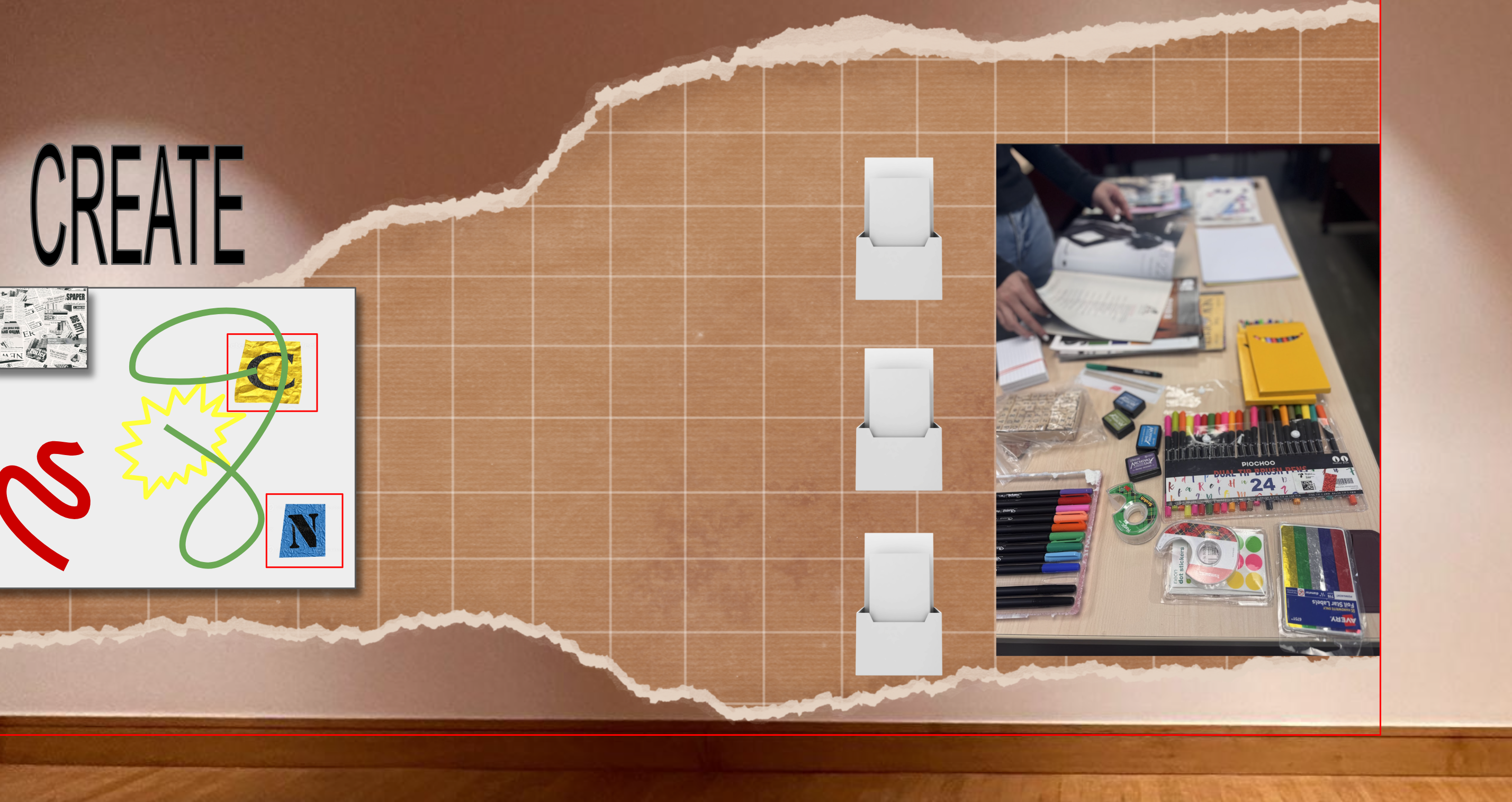
Zines
Zines are a form of communication whose topics can be as diverse as political stances to favorite lists, but whose commonality is in their independent creation, production, and distribution.
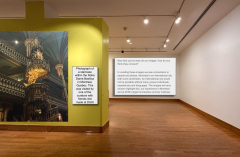
Digital Exhibits
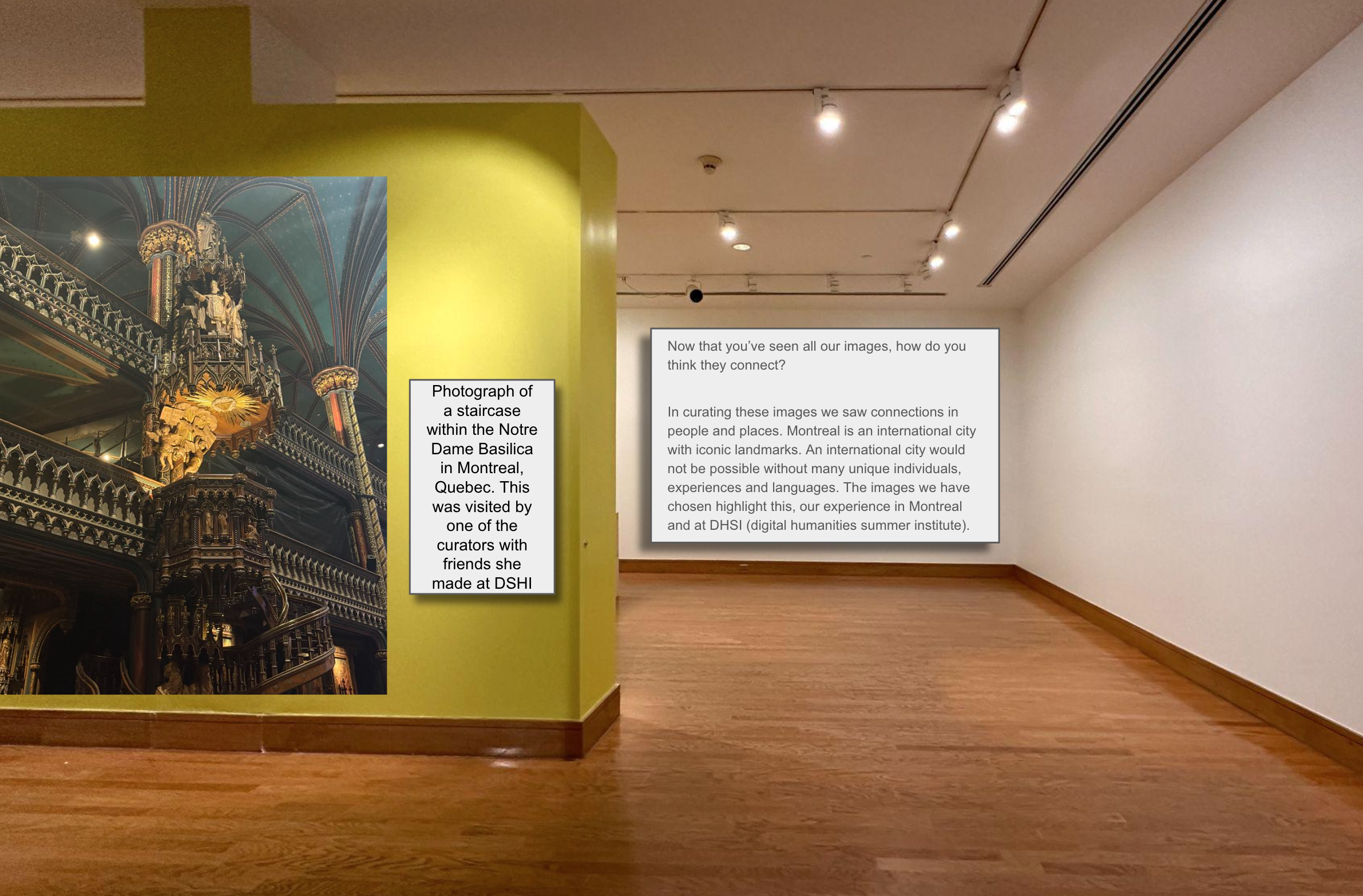
Digital exhibits are a way to organize variant objects (or modes) around a cohesive narrative or theme. Panel slides, extended labels, and thematic text labels collectively tell a story about these objects and do so within various material and spatial constraints and foci. These often written sections simultaneously detail an individual object in the exhibit as well as reinforce a narrative of cohesion.
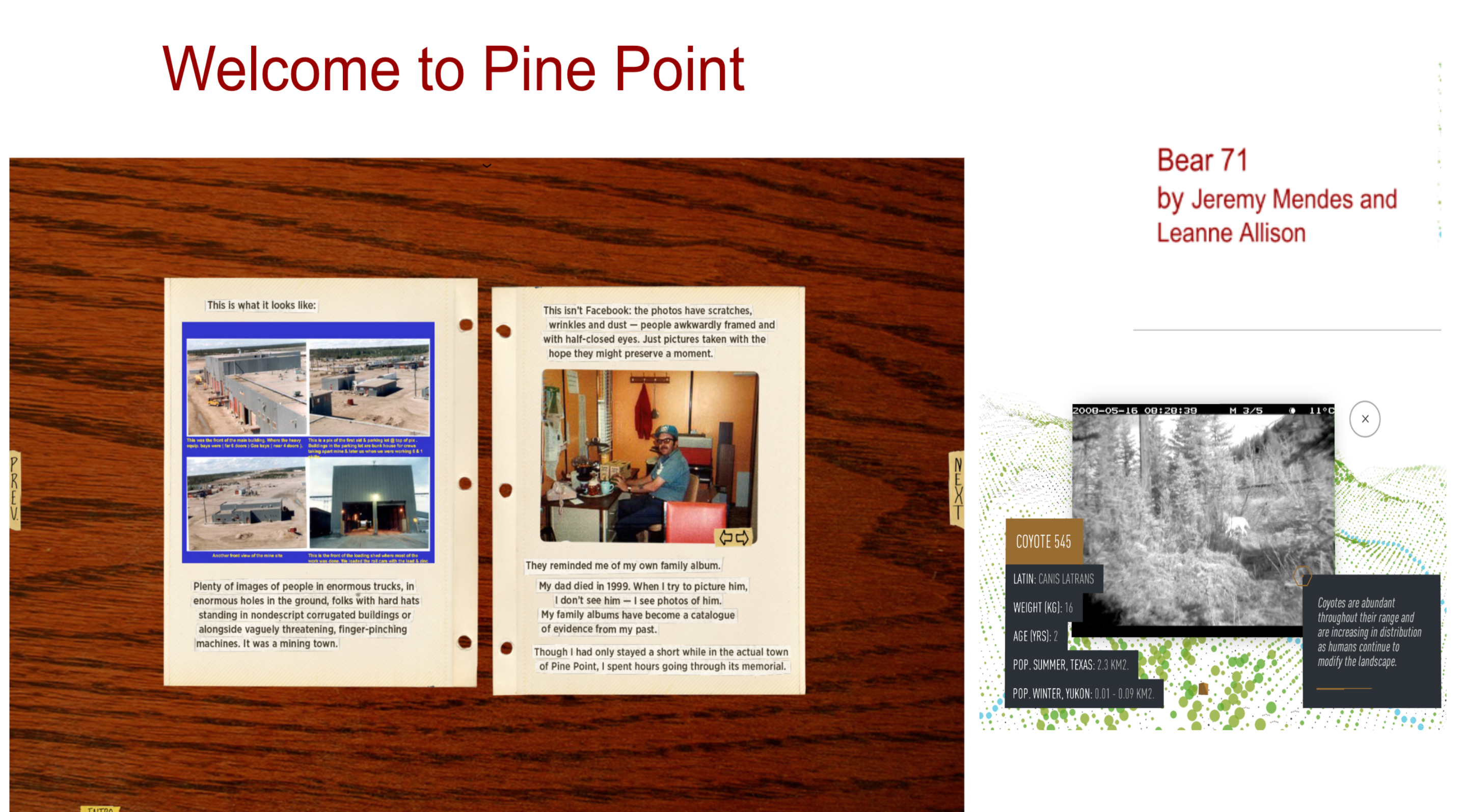
Interactive Documentaries (idocs)
According to Judith Aston, an interactive documentary, or "idoc" is ”any project that starts with an intention to document the ‘real’ and that does so by using digital interactive technology.” This interactivity can include a user's mouse-clicking but extends to the relationship created between each part and the narrative that unites them. Ultimately, these idocs depict a world-view as opposed to solely causal thinking.