Campaigning at CWRU: Presidential Elections, 1892-2008

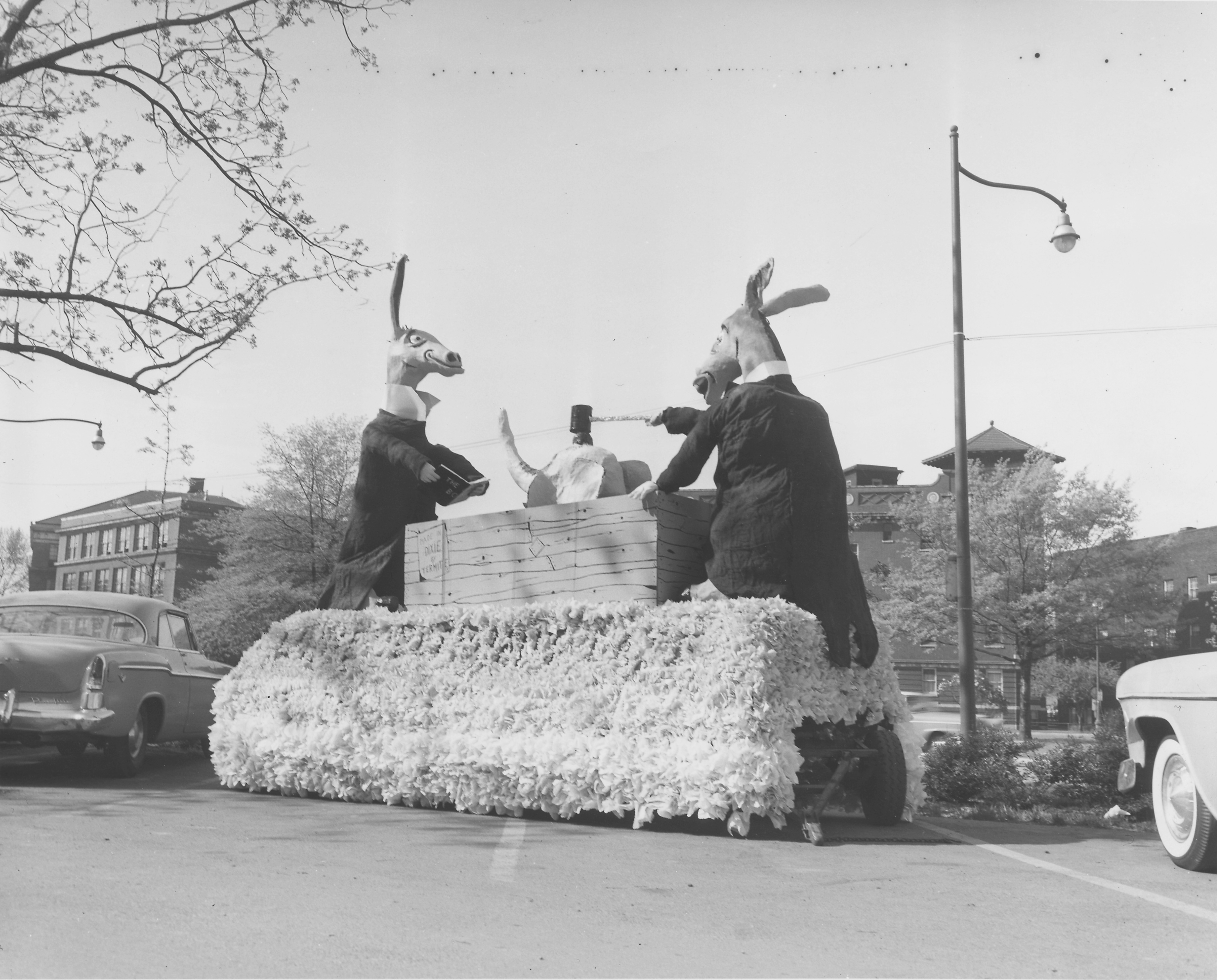
We've had mock political conventions - complete with parades and a Mock Political Convention Queen. We've had lecture series on public policy issues. We've had straw votes and our own Gallup poll. We've had faculty roundtables. We've had candidate and celebrity campaign appearances. We've had demonstrations and debates. Case Western Reserve University has a long and rich tradition of involvement in presidential elections.
The staff of the University Archives has produced this exhibit highlighting some of our past campaign activities, using material from the archives. Below is an overview of selected national and campus events. The year is a link to more details and images of campus events that year, as well as the election results – electoral votes and national and Ohio popular votes. The same pages can be accessed in the timeline above.
References to schools use names contemporaneous with events. Clarification may be found at Schools of CWRU.
| National Events | Campus Events | |
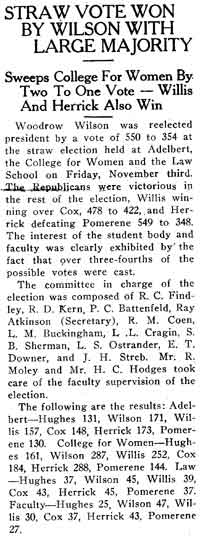
| Ohio split its electoral votes, 1 for Grover Cleveland and 22 for Benjamin Harrison, for the only time between 1892 and 2000. | 1892 | Almost 30 years before they won the right to vote in presidental elections in Ohio, students at the College for Women held their own presidential election; "Election day at the college resulted in a sweeping Republican victory..." |
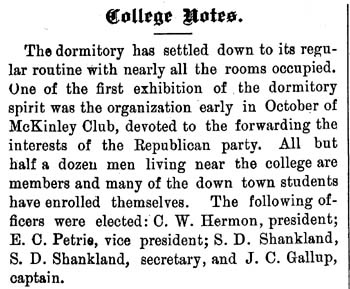
| William Jennings Bryan, at 36, was the youngest presidential nominee ever. | 1896 | On October 8, 1896, the Adelbert chapter of the McKinley First Voter's Club and the delegation from Case traveled to Canton, Ohio, to hear William McKinley speak. |
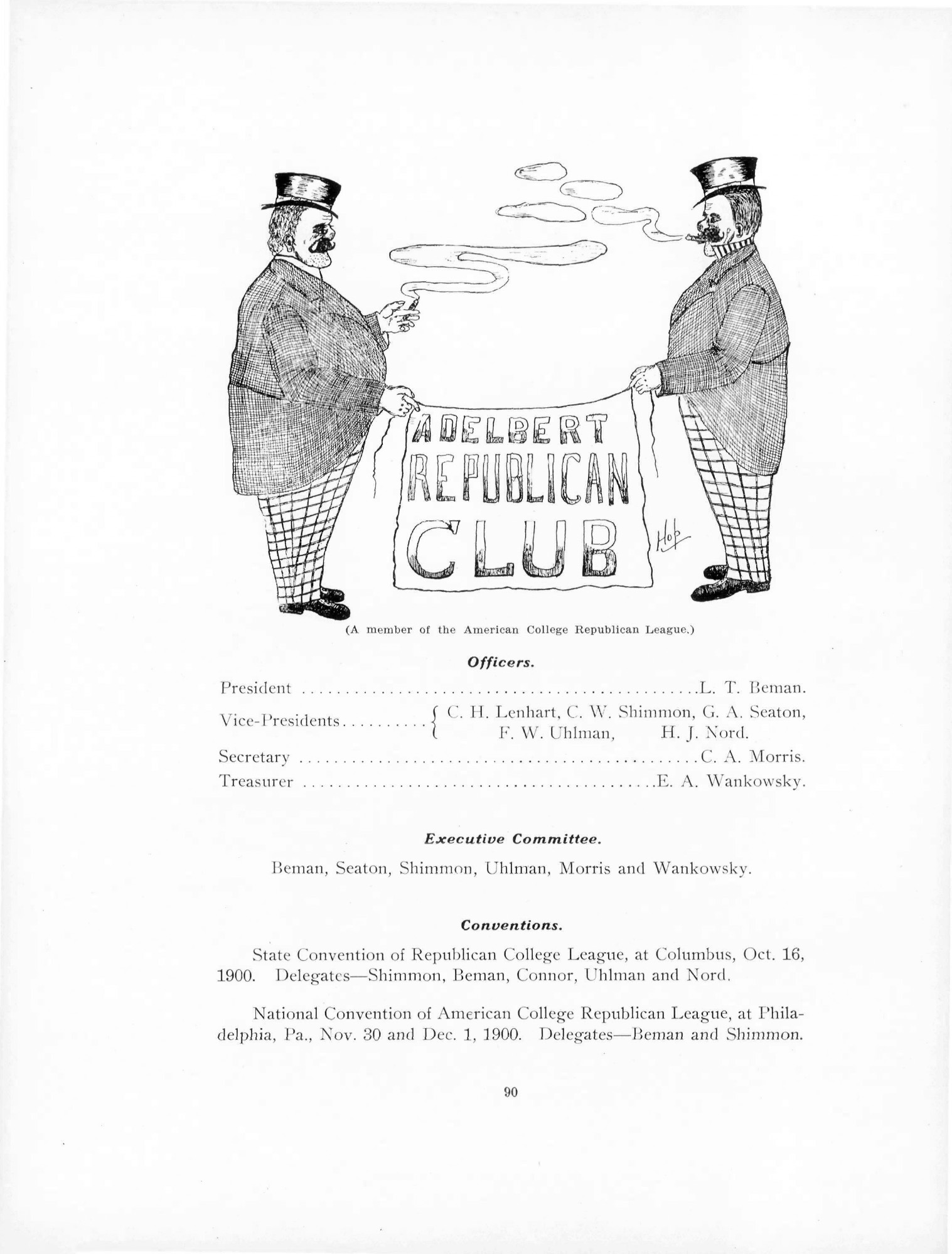
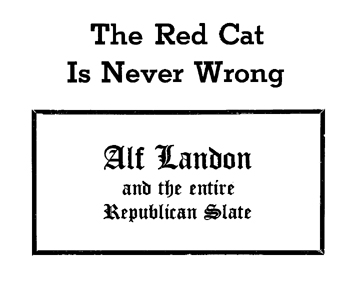
| Eugene Debs was nominated for the first of five times by the Socialists, on a platform including female suffrage. | 1900 | An editorial in the student newspaper affirmed there was a place in college for political clubs, "The college man should be the first citizen of the republic..." |
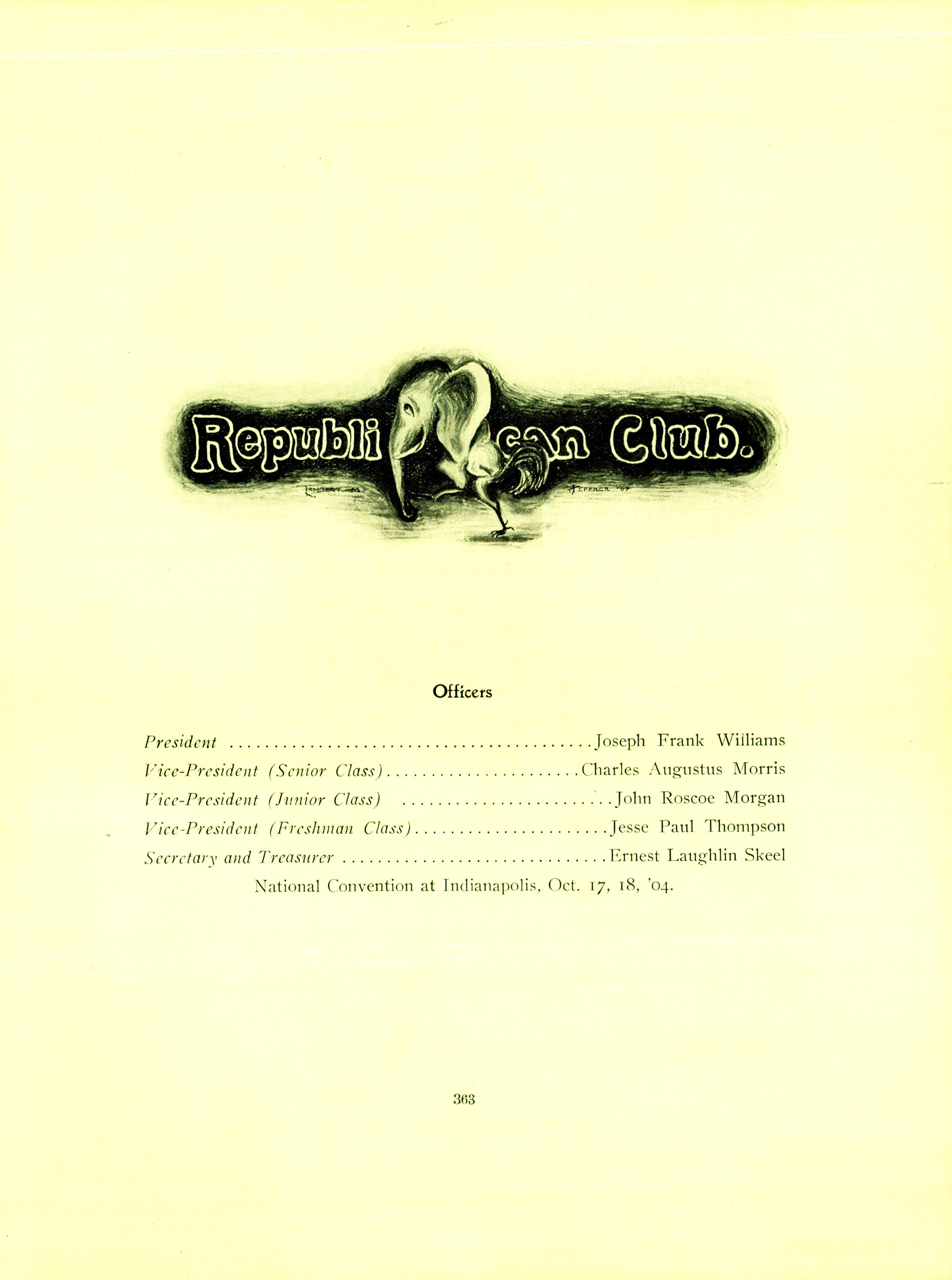
| Called His Accidency by opponents referring to his succession to the presidency after McKinley's assassination, Roosevelt was the first former vice president elected since 1836. | 1904 | The Law School Republican Club was the only documented student political activity this year. |
| For the first time, both major party presidential candidates campaigned vigorously and personally. | 1908 | A mock convention was held at Gray's Armory in downtown Cleveland on May 2, 1908. Preceded by a parade, it was made up of students who formed the delegations from states. After five ballots, Robert LaFollette was chosen as the nominee. |
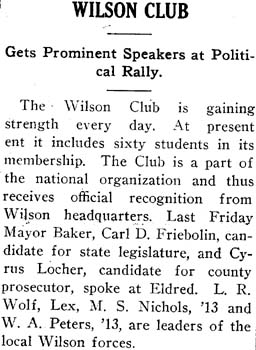
| Wilson's New Freedom competed with Roosevelt's New Nationalism. | 1912 | The Wilson Club brought state and local candidates, including Cleveland Mayor Newton D. Baker, to campus to speak to the students. |
| Supreme Court Justice Charles E. Hughes was the Republican nominee for president. | 1916 | The WRU student newspaper reported that, "The formation of two political clubs of equal strength has crystallized party bitterness on the campus into a stern battle for votes which will come to a climax on Friday before the November elections when a straw vote will be taken." |
| On August 26, 1920, Secretary of State Bainbridge Colby certified ratification of the Nineteenth Amendment to the U.S. Constitution. In 1920, 26 million women voted in the presidential election. | 1920 | On October 20, 1920, Franklin D. Roosevelt, Democratic vice presidential candidate, spoke at the Law School before a large number of faculty, law students, and undergraduates. The WRU student newspaper described him as, "tall and slim, modishly dressed, of strikingly regular features, a most pleasing voice, and wonderful ease in speaking, he looked the part of a born leader." |
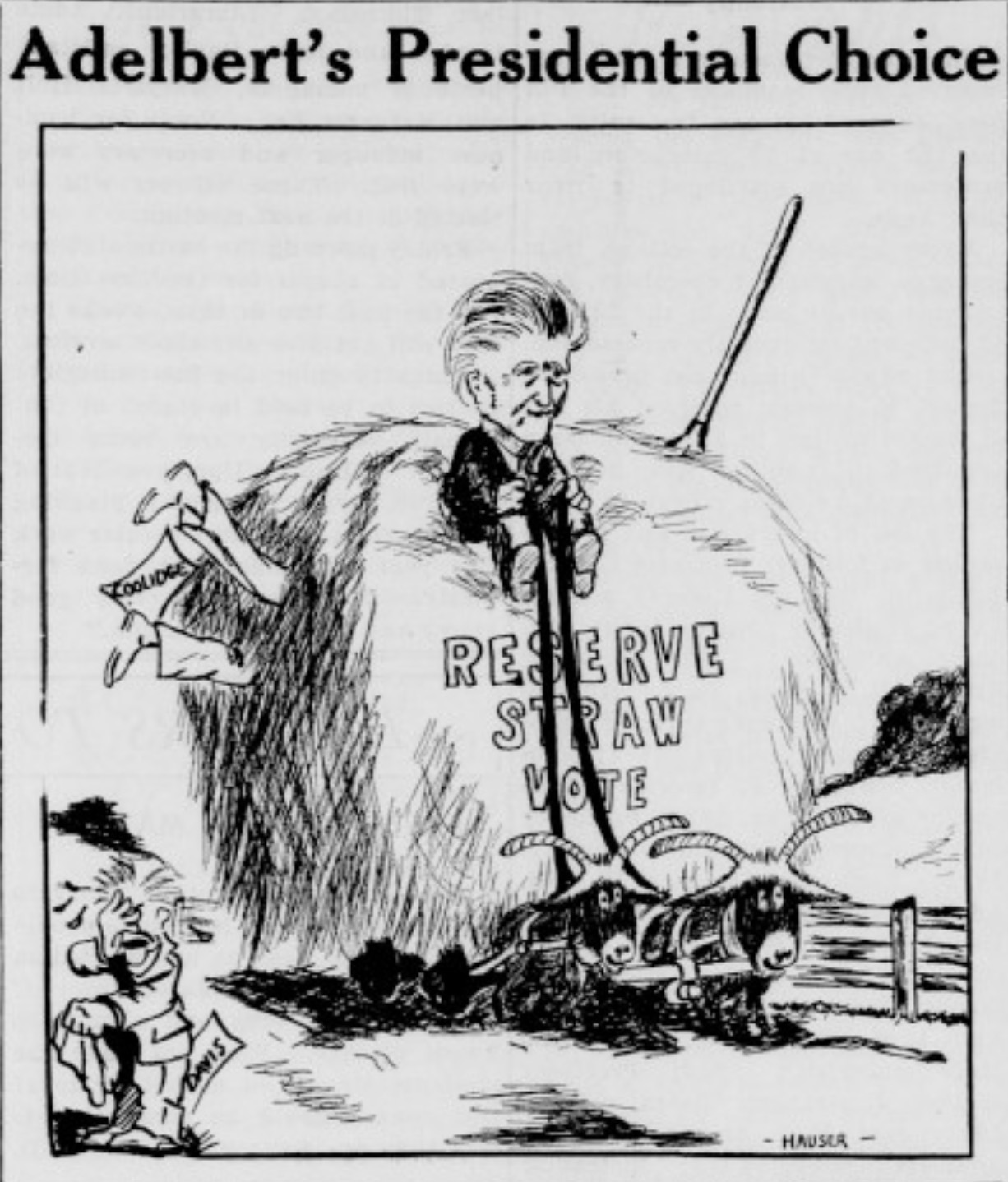
| The Republican convention was held in Cleveland in June, characterized by many as the most boring in party history. In contrast, the Democrats had a nine-day deadlock over the nomination. | 1924 | In a straw vote of Adelbert College students, LaFollette was picked as president with 196 votes. Coolidge received 129, and John W. Davis received 35. |
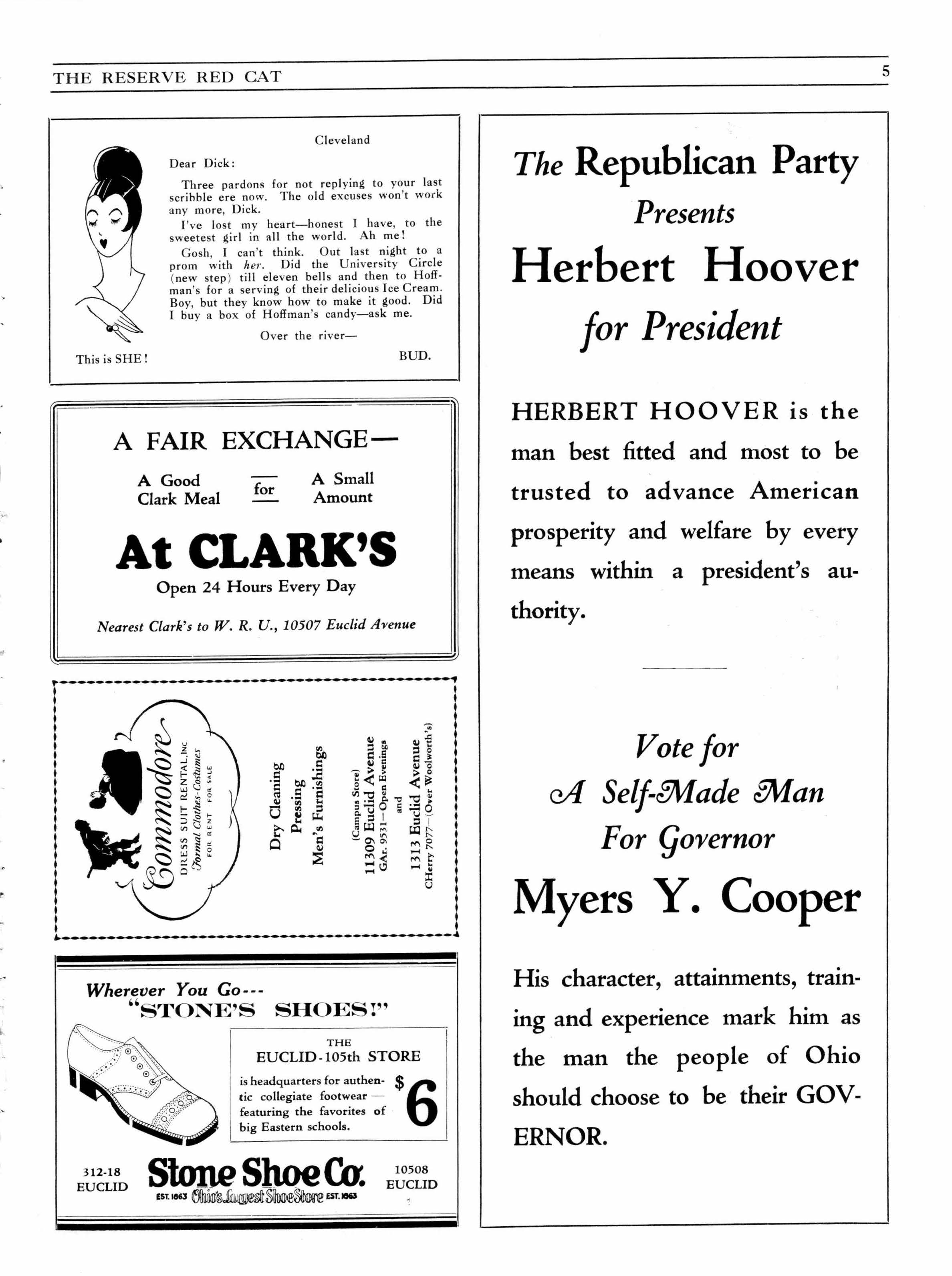
| The anti-Catholicism in the campaign waged against Al Smith cast a pall over the presidential aspirations of Catholics until 1960, when Kennedy's election showed a Catholic could be elected. | 1928 | Voting machines were used on campus for the first time, to ensure an accurate vote-count in the straw vote sponsored by the Reserve Weekly, the WRU student newspaper. |
| Franklin D. Roosevelt was the first major party candidate to deliver his acceptance speech at the party's convention, breaking the tradition that the nominee not appear at the convention, but accept the nomination at a ceremony held weeks later. | 1932 | The Reserve Politics Club staged a mock Democratic Convention in April 1932. The Flora Stone Mather chapter of the League of Women Voters helped plan the mock convention. Fraternities made up the delegations of states. |
| The Republican Party convention was again held in Cleveland. | 1936 | WRU was one of six Ohio colleges that took part in a nation-wide collegiate straw vote for president organized by Princeton's Daily Princetonian. |
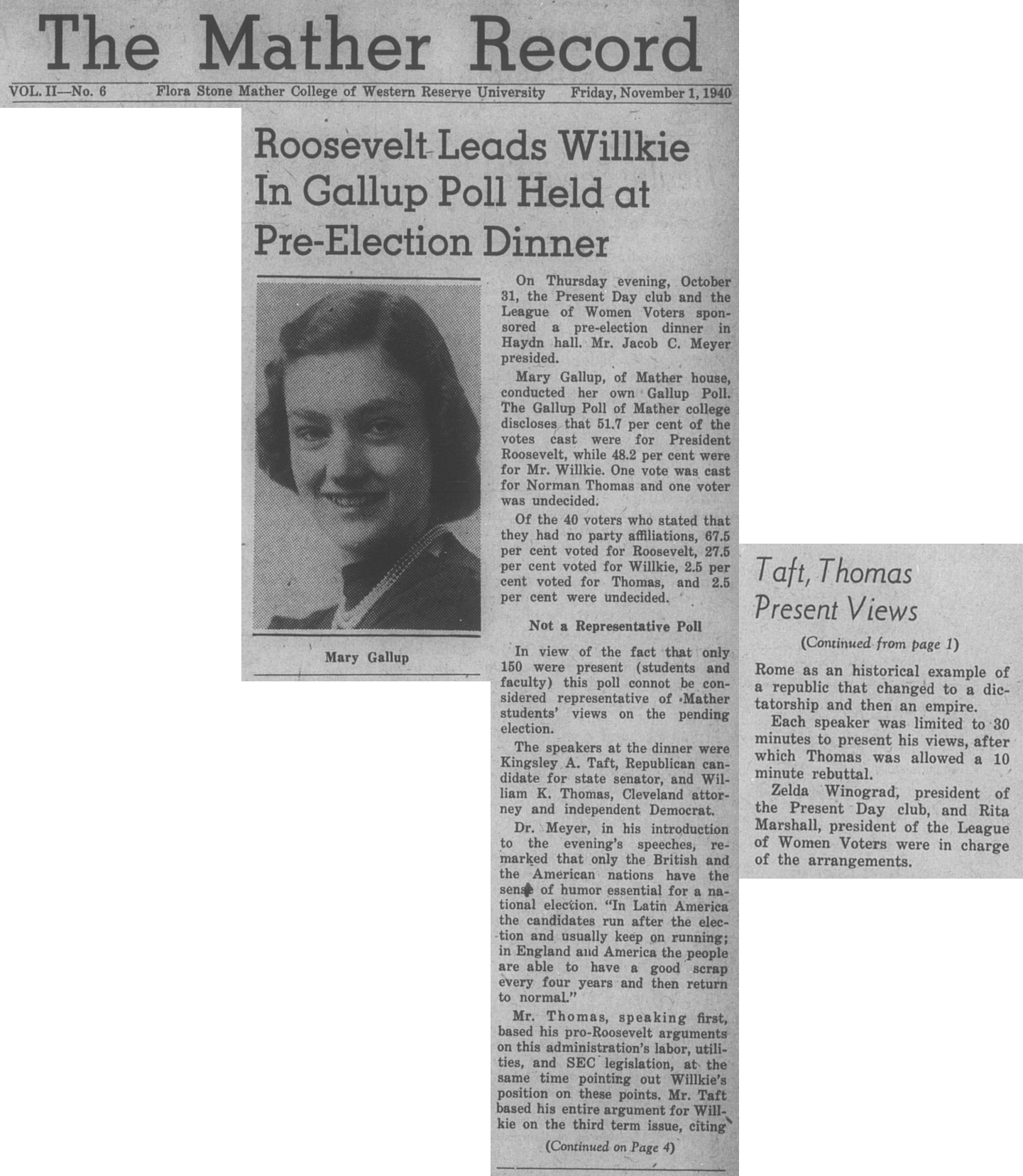
| Franklin D. Roosevelt was the first and only President elected to a third term. | 1940 | Mary Gallup, of Mather House, conducted her own Gallup poll of Mather College. |
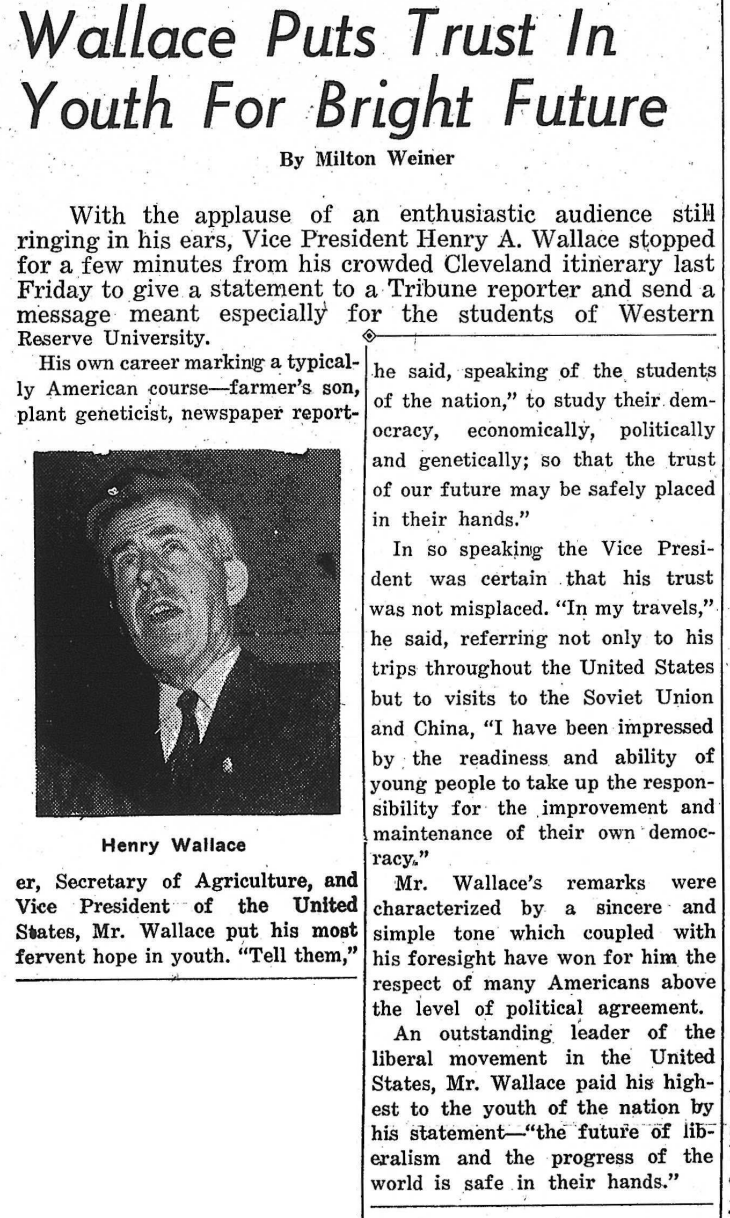
| Both major party presidential candidates (Franklin D. Roosevelt and Thomas E. Dewey) were from New York. | 1944 | Vice President Henry Wallace, at a stop in Cleveland on October 13, told a Reserve Tribune reporter to tell students to "study their democracy, economically, politically and genetically; so that the trust of our future may be safely placed in their hands." |
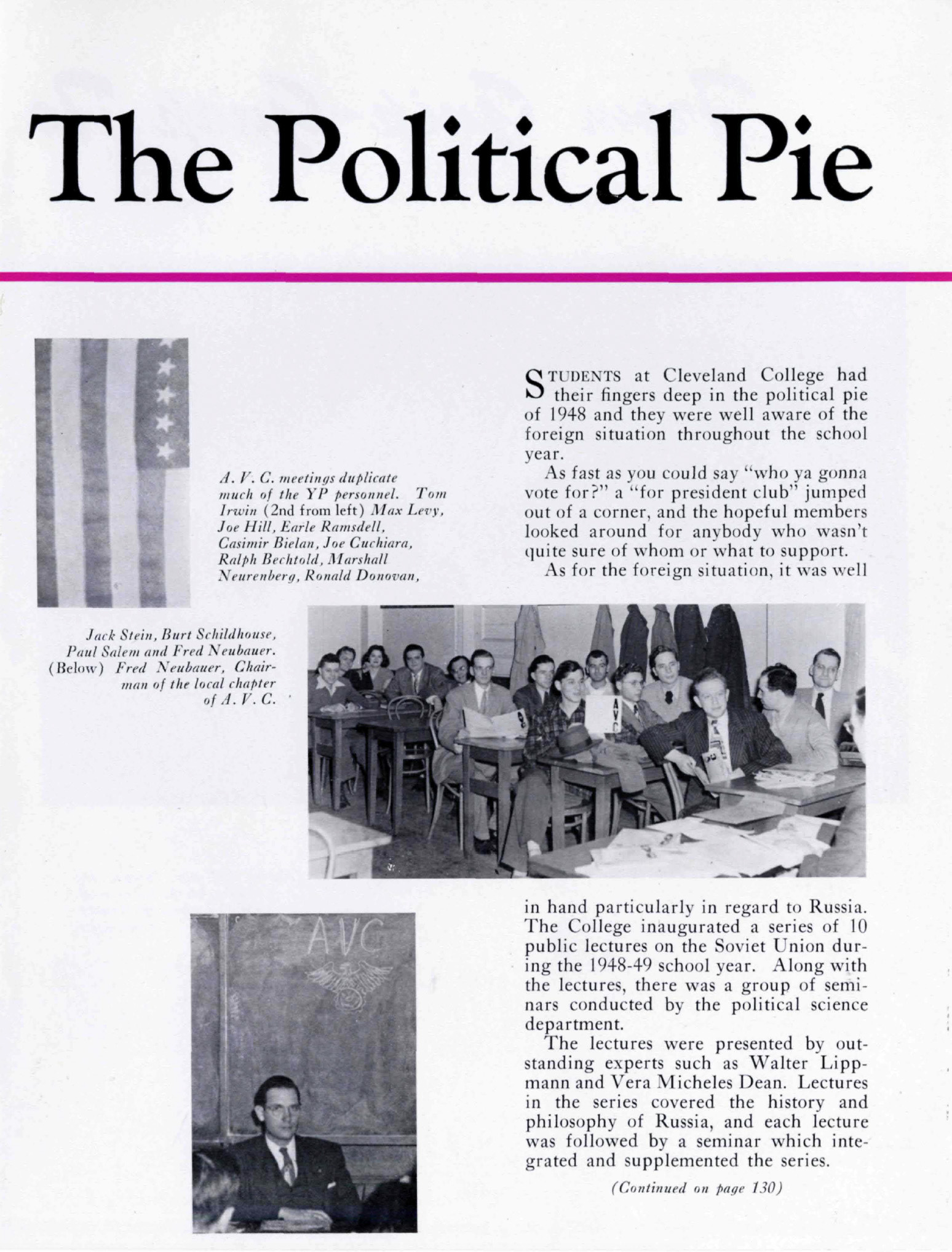
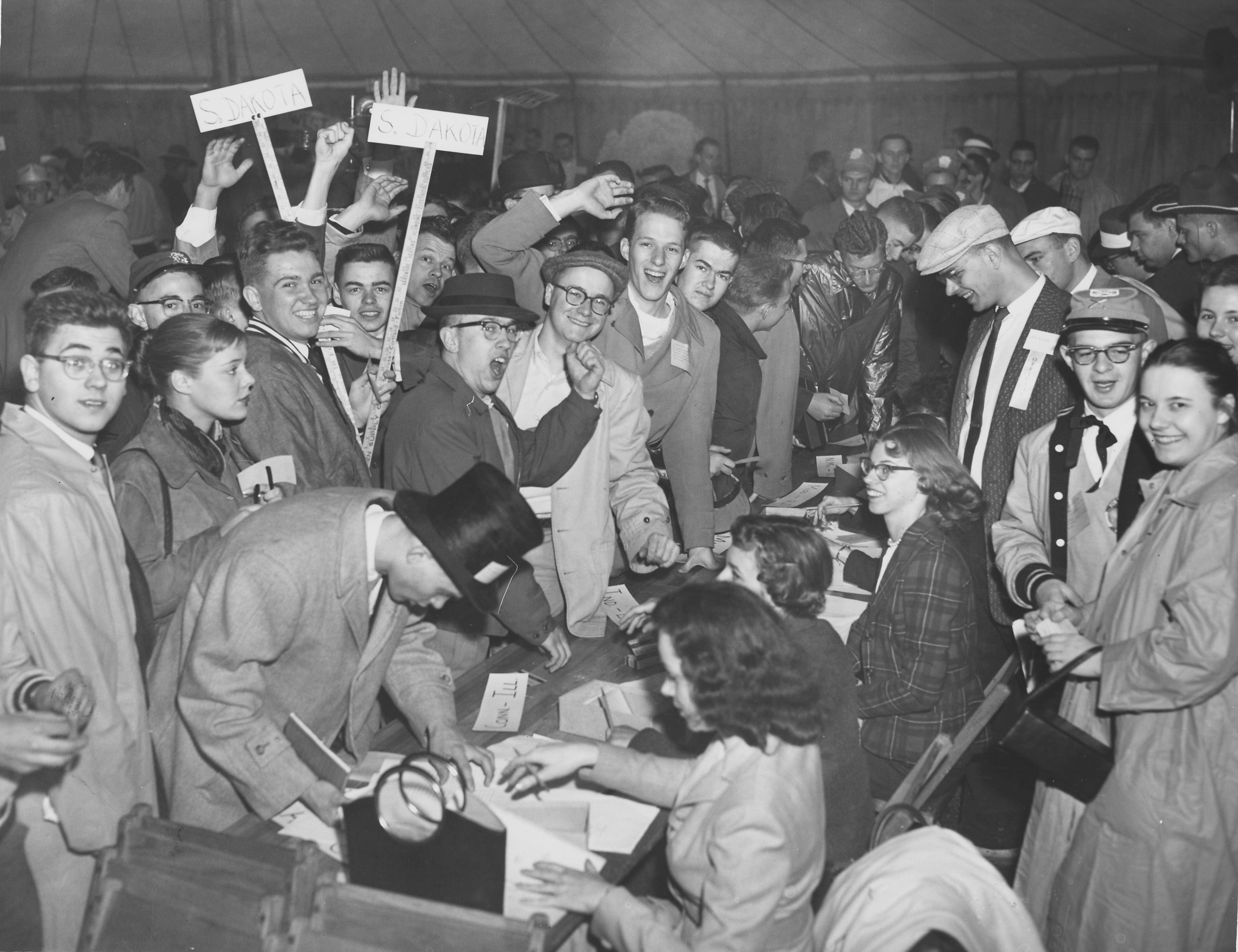
| Television coverage of party conventions began. Leading political writers and pollsters predicted a Dewey victory. Post-election analysis concluded that polling was still an infant science and that too little attention had been paid to undecided voters. | 1948 | On May 11, 1948, Case Institute of Technology held its first mock political convention. Classes were dismissed at 10am to permit students to participate. A large tent was set up on Van Horn Field for the event, while the previous evening convention activities started with a parade down Euclid Avenue. |
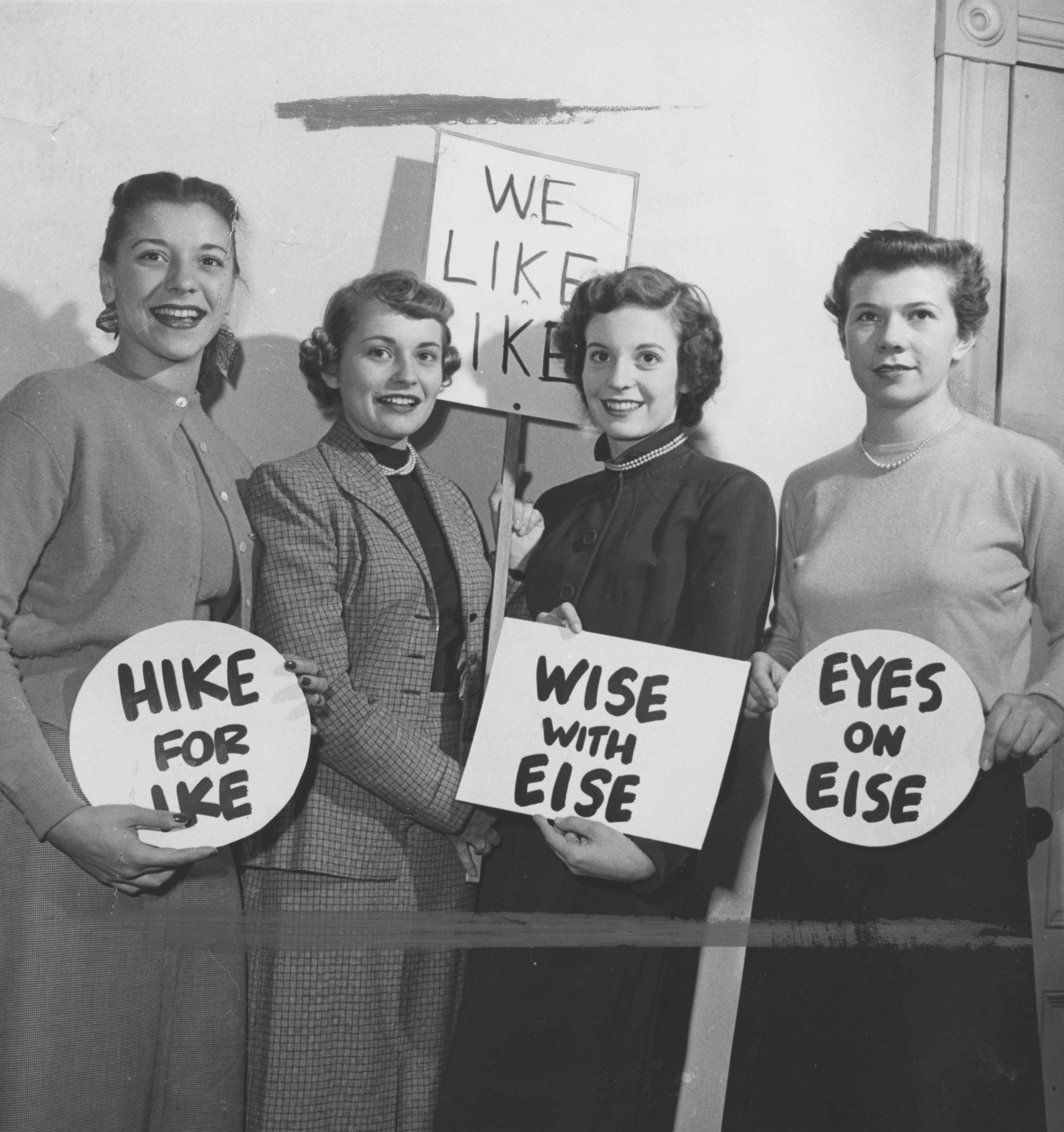
| When the largest television audience yet assembled heard Vice President Richard M. Nixon's "Checkers Speech," the power of television in politics was confirmed. | 1952 | In an informal vote conducted by the Reserve Tribune, students picked Adlai Stevenson over Dwight Eisenhower. |
| The only time in the twentieth century that the major parties ran the same candidates twice in a row. | 1956 | The WRU and Nursing chapters of Volunteers for Stevenson collected $200 on October 16, "D" (Dollars for Democracy) Day. |
| The four general election presidential debates were sponsored by the three television networks, ABC, CBS, and NBC. The first debate was watched by 70 million viewers. | 1960 | On October 27, 1960, Republican vice presidential candidate Henry Cabot Lodge spoke to students from the steps of Haydn Hall. |
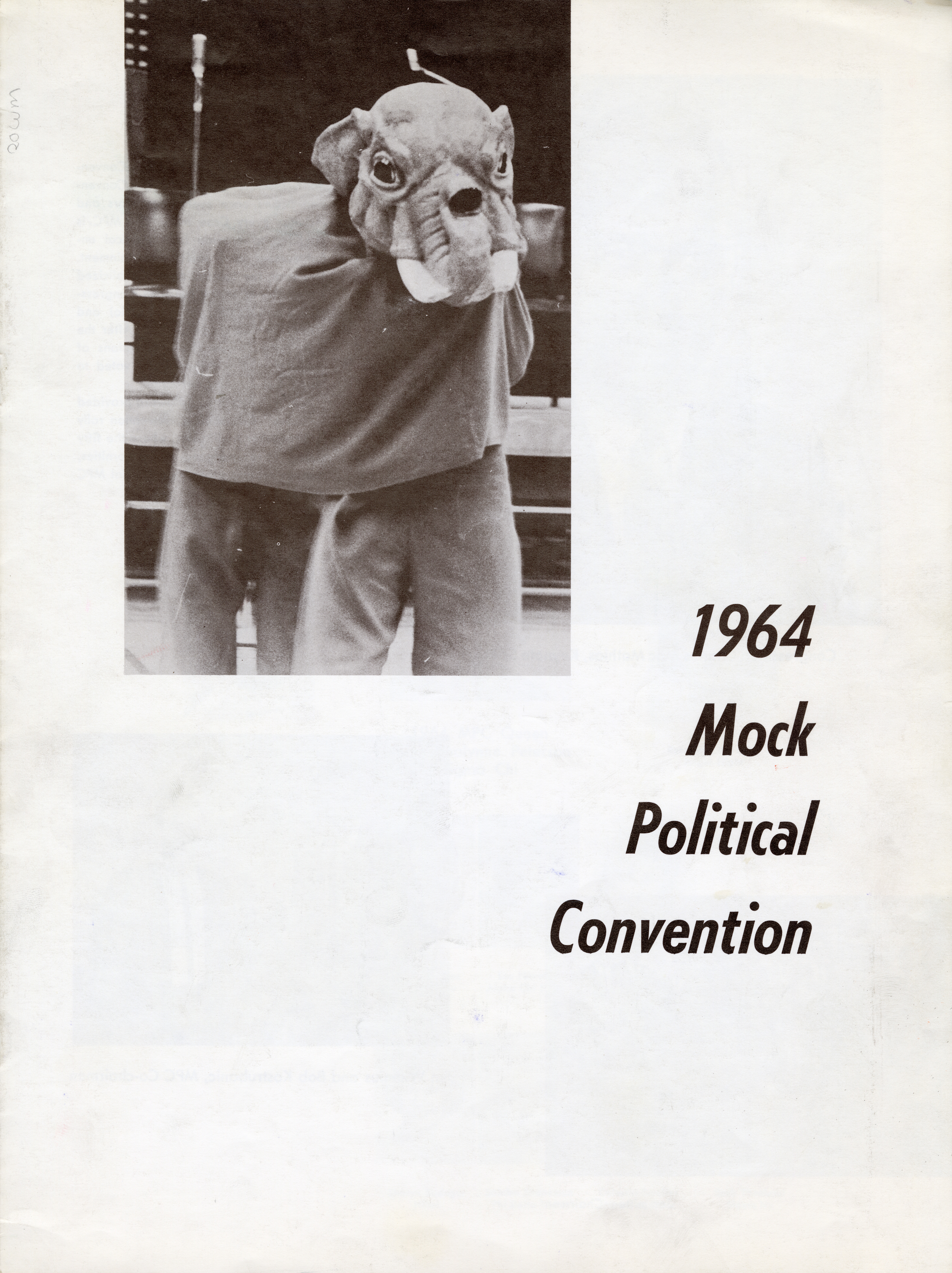
| Lyndon Johnson's popular vote plurality was the largest to that time. | 1964 | Case’s mock political convention returned to the Republican Party after its single 1960 experiment with the Democrats. |
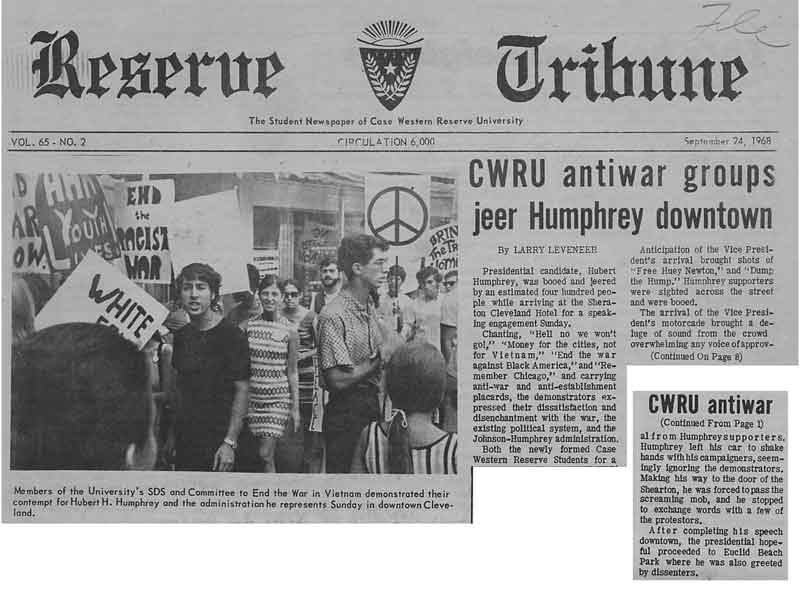
| Eugene McCarthy's Children's Crusade was dominated by college students who cut their hair and shaved their beards to campaign in New Hampshire's primary with the slogan, Get Clean for Gene. | 1968 | Fred Halstead, Socialist Workers Party candidate for president, was the keynote speaker at the Ohio Young Socialist Conference, held at Hatch Auditorium. |
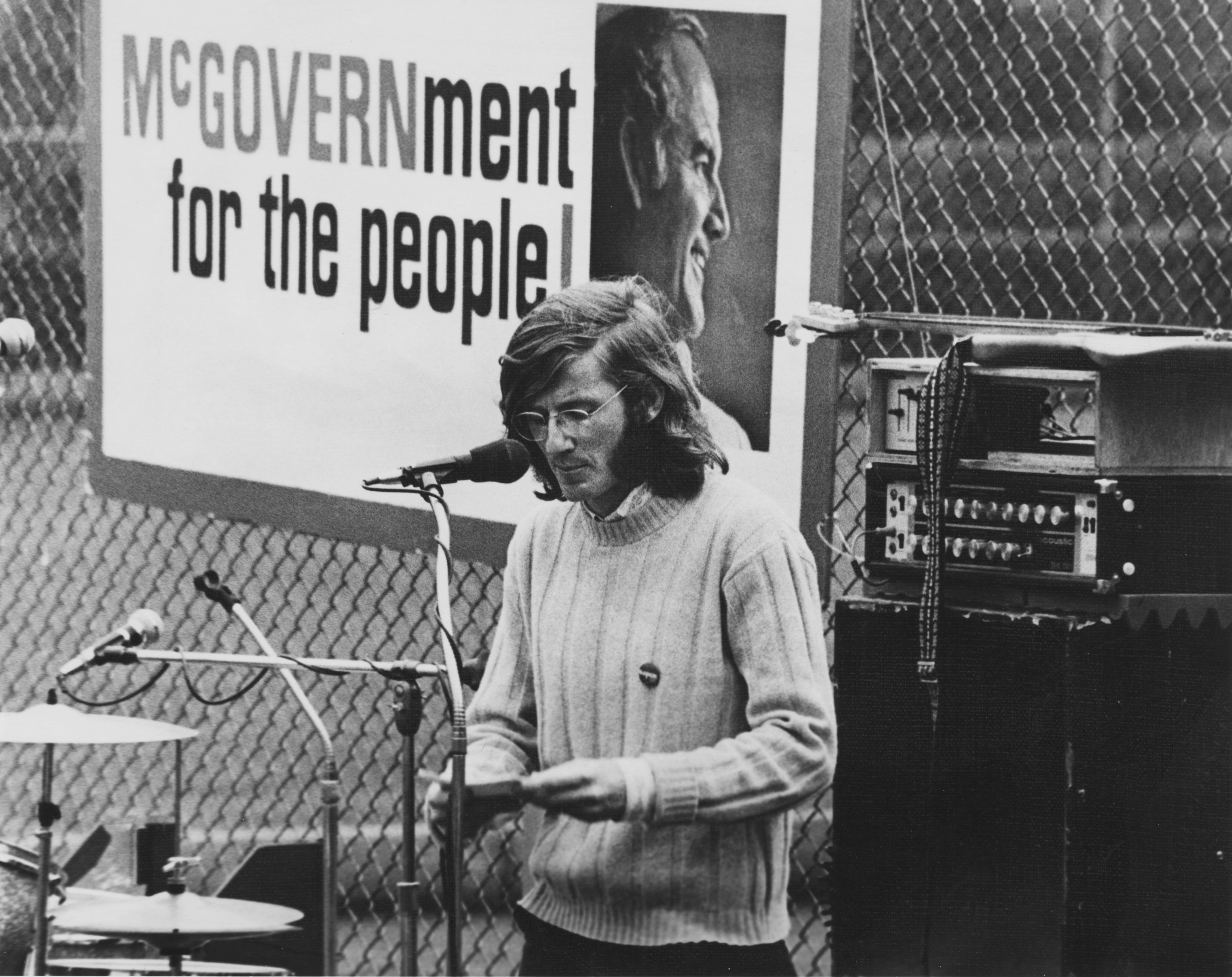
| On June 30, 1971, Ohio became the 38th state to ratify the 26th Amendment to the Constitution, reducing the voting age to 18. In 1972, 11 million 18-to-20 year-olds voted for President. | 1972 | A crowd of 4,000 people, including six busloads from CWRU, heard George McGovern speak on the Cleveland State University campus on October 25. |
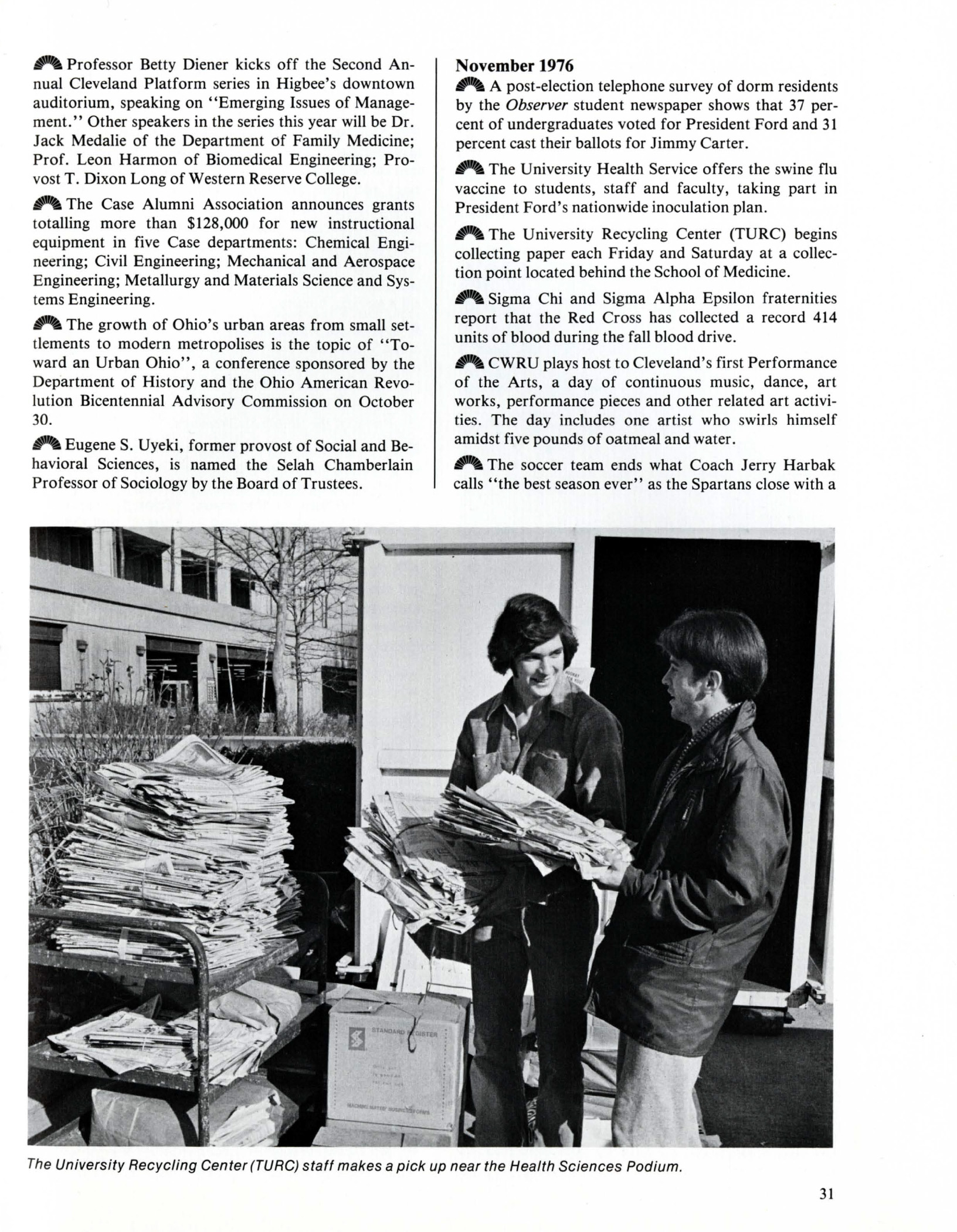
| There were no general election presidential debates between 1960 and 1976. The four debates in 1976, three presidential and one vice presidential, were sponsored by the League of Women Voters. | 1976 | In November 1976, the Observer conducted a post-election telephone survey of dorm residents. 37% of the undergraduates polled voted for Gerald Ford, while 31% cast their ballots for Jimmy Carter. |
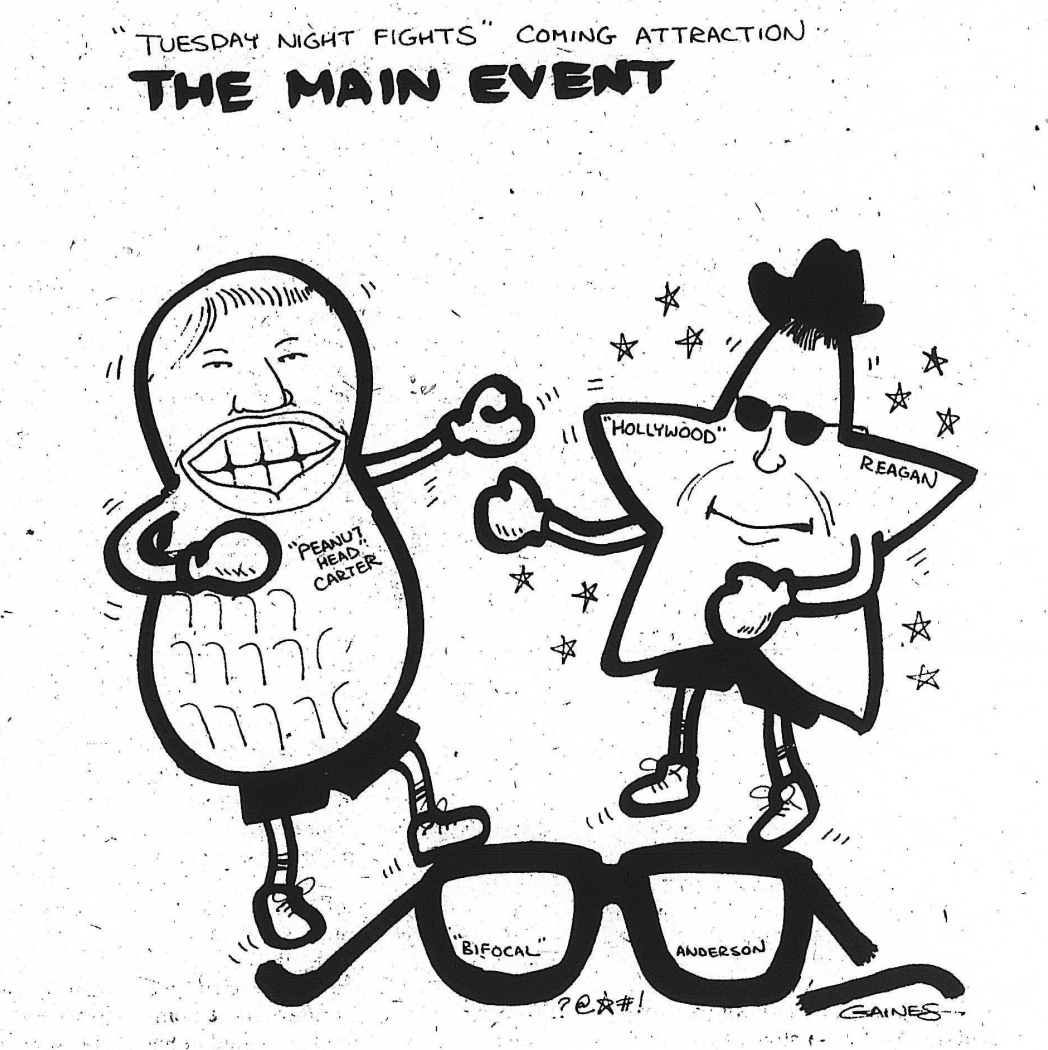
| The League of Women Voters again sponsored the two general election presidential debates, one between Reagan and Anderson and one between Reagan and Carter. The Reagan-Carter debate was held in Cleveland. | 1980 | On October 28, 1980, CWRU students and noted political scientist Garry Wills congregated at Thwing Center to watch the Ronald Reagan - Jimmy Carter debate. |
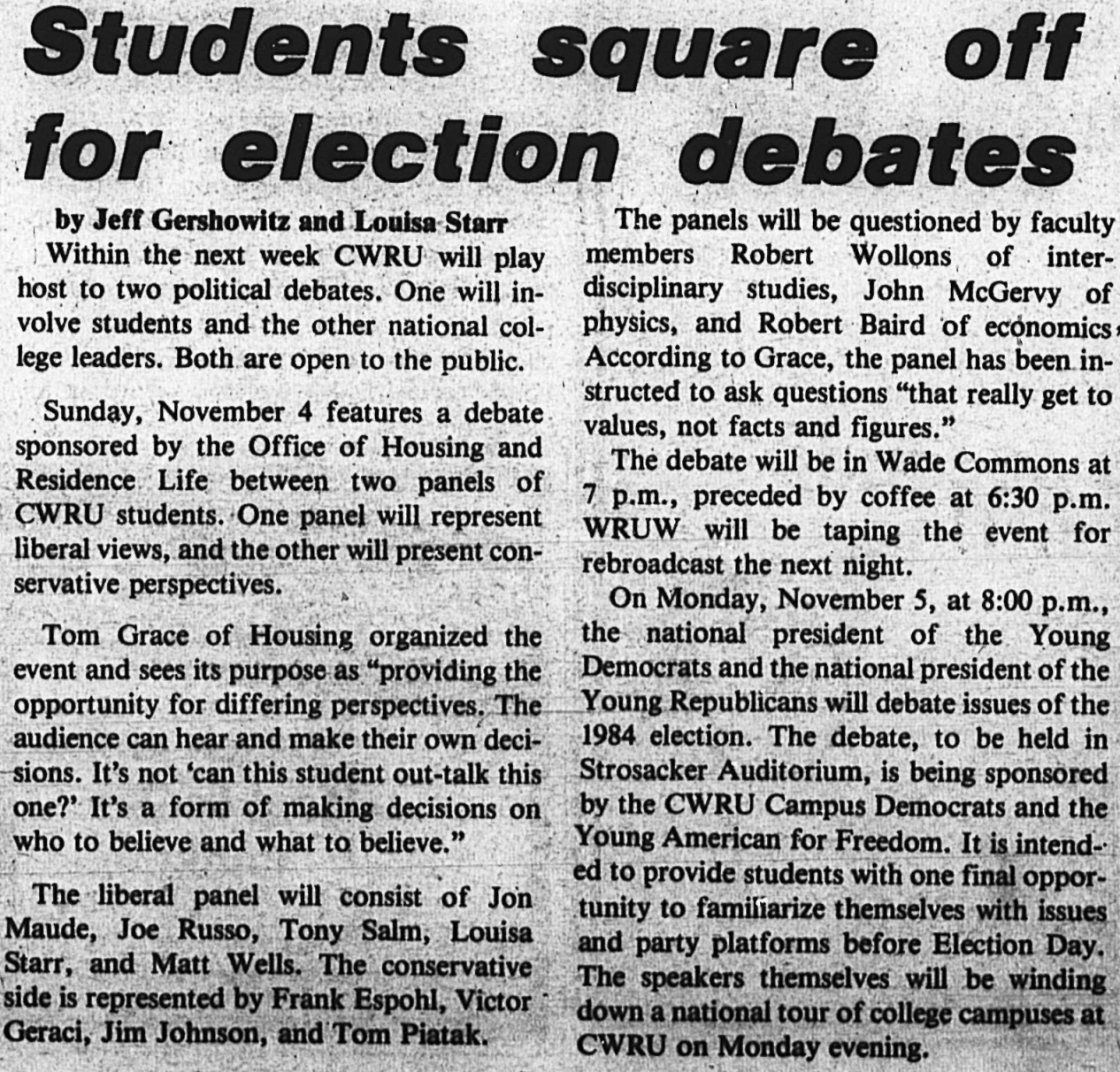
| Geraldine Ferraro was the first woman on a major party ticket. | 1984 | At the Election Issues Debate at Thwing Center on the CWRU campus, Cuyahoga County Republican Party leader, Bob Hughes, squared off against Tim Hagan, Democrat, Cuyahoga County Commissioner. |
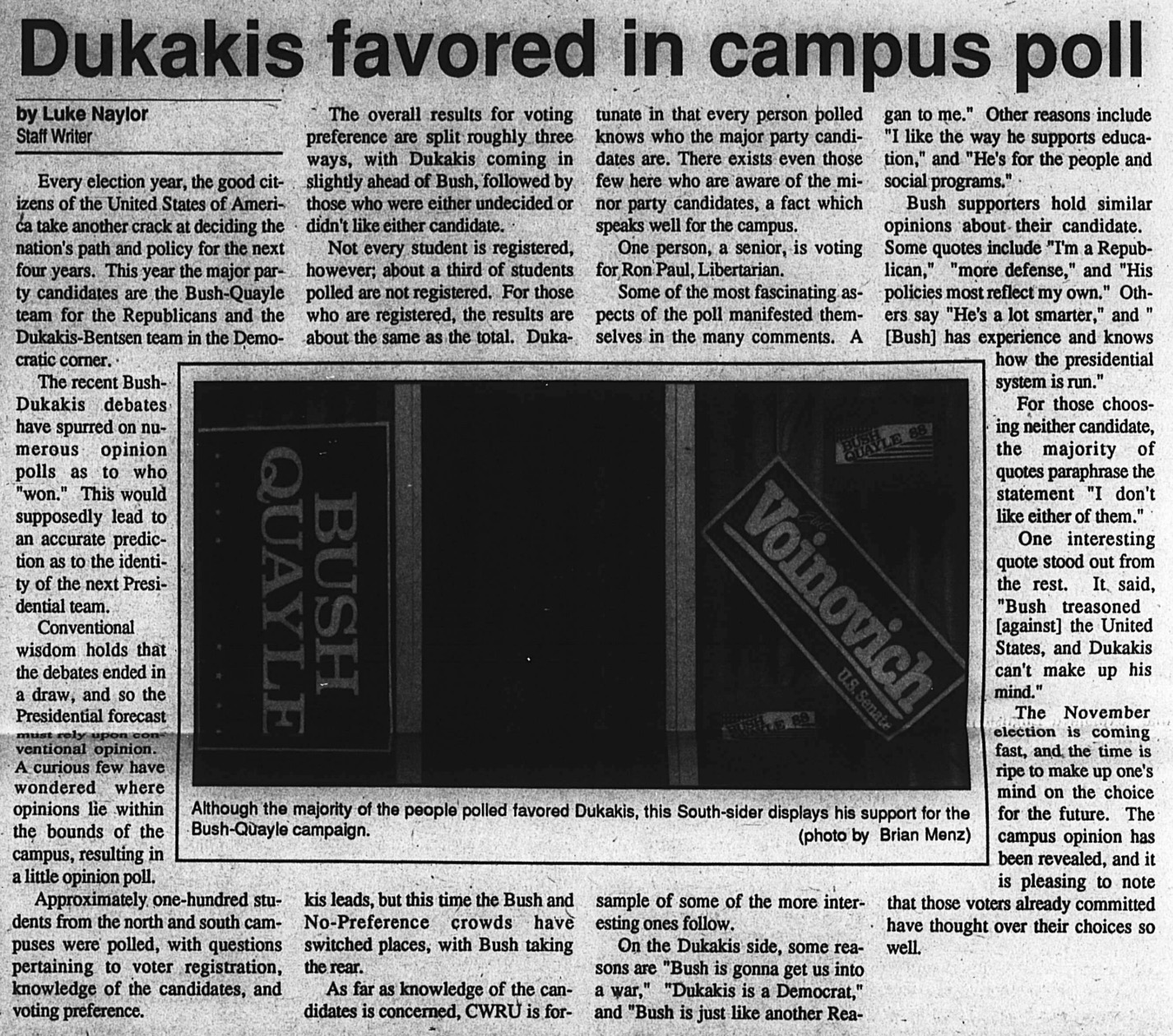
| In 1968, 15 states held presidential primaries. By 1988, that number grew to 37. | 1988 | Michael Dukakis finished ahead of George Bush in a student poll taken by The Observer. Though an estimated third of respondents were not registered voters, they all knew who the major party candidates were. |
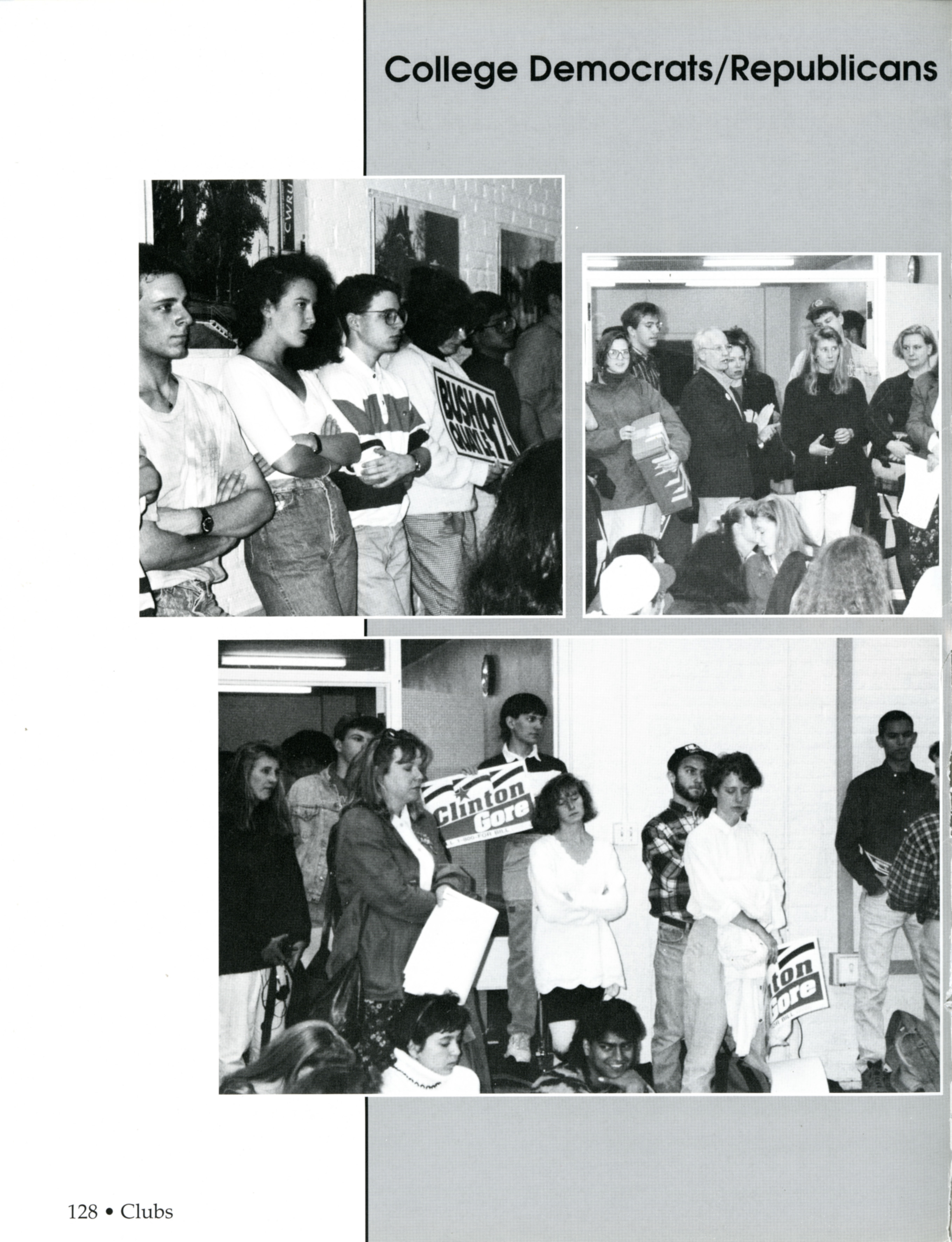
| For the first time, the general election presidential and vice presidential debates were all three-way debates, including Democratic, Republican, and Independent candidates. | 1992 | Students with access to Free-Net and the Internet could read the speeches and platforms of the two presidential candidates directly. Free-Net also created a special voters' forum. This bulletin board posted hundreds of opinions concerning the upcoming presidential election. |
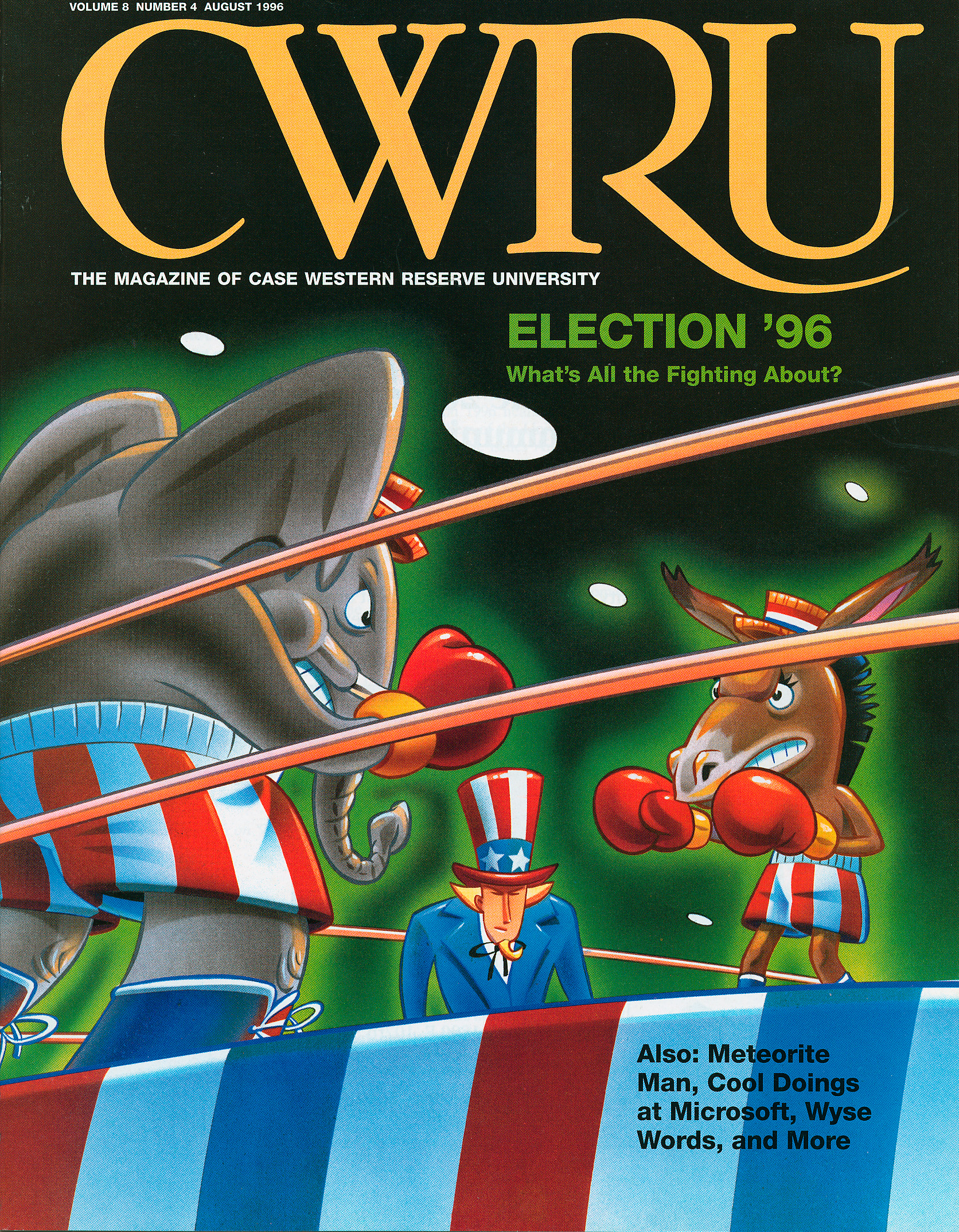
| Presidential primaries were held by 42 states. The Presidential Commission on Debates sponsored two presidential and one vice presidential debates. | 1996 | CWRU College Libertarians hosted party candidate Harry Browne in the spring. After the October 6 presidential debate, the club gathered to watch Browne on CNN analyze the debate. |
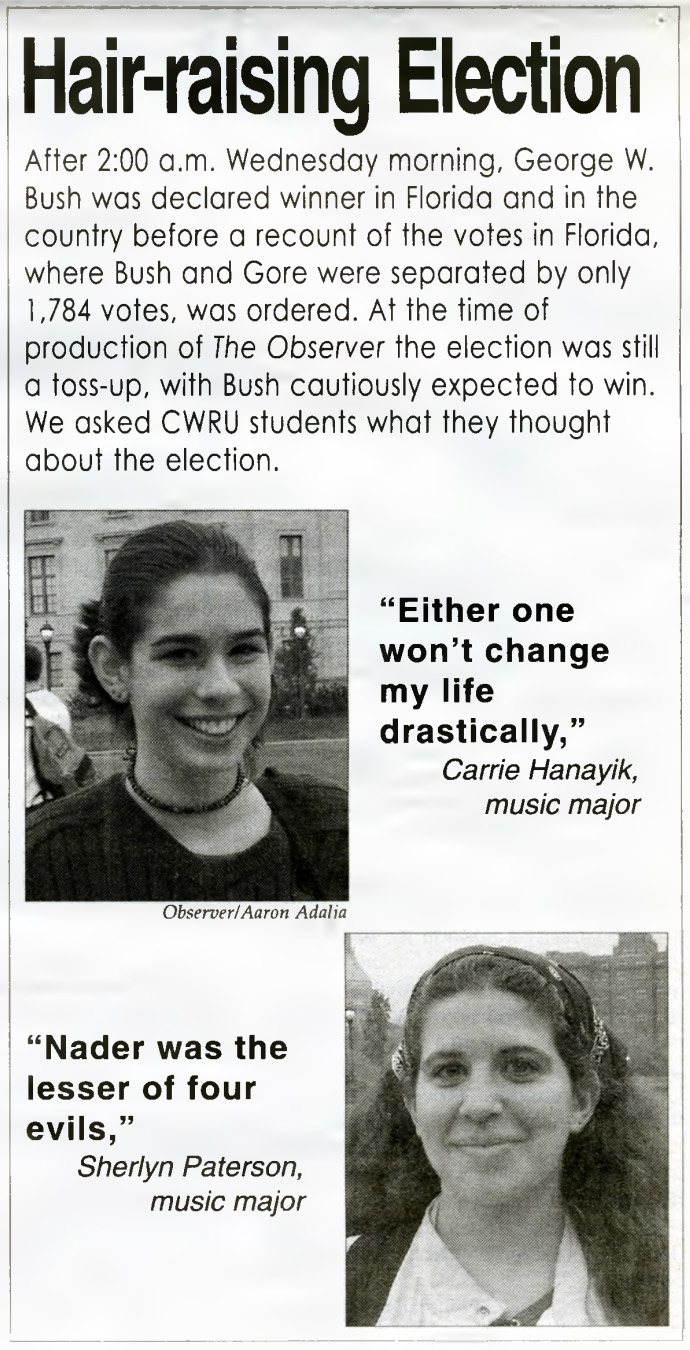
| Election results were not decided for more than five weeks after the election, with technology, in the form of punch card ballots, at the heart of the dispute. | 2000 | Libertarian presidential candidate Art Olivier visited campus. |
| Democrat John Kerry and Republican George W. Bush face each other in three debates. | 2004 | CWRU hosts the vice presidential debate between Republican Dick Cheney and Democrat John Edwards. |
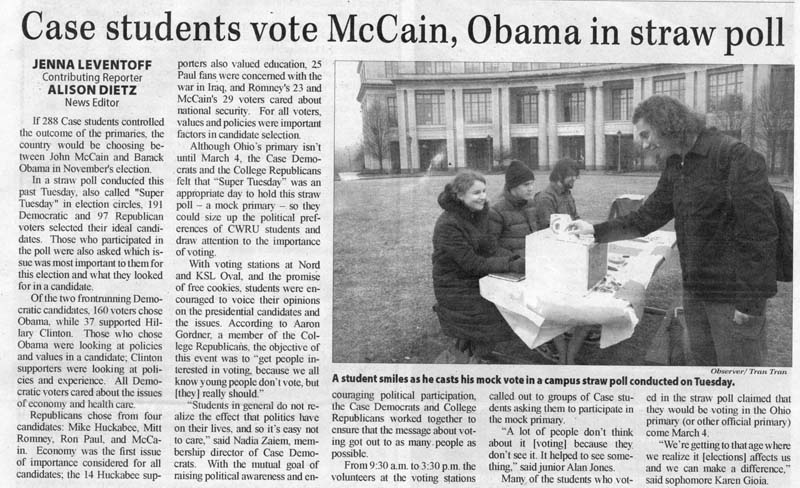
| Barack Obama is elected the first African-American president of the United States. | 2008 | Campus primary straw poll correctly predicts the Republican and Democratic nominees for president. |