Four Corners 3
If what Unravel offers is indeed an experience of empathy (and that is debatable), this is a vision of empathy that is not about appropriating or instrumentalizing the feelings of others. It is also not about learning or becoming better people. This vision of empathy is about building precarious yet vital connections between points by following indirect paths constructed using one’s own body. It is about queer entanglements, a network of individuals connected by a series of knotted paths that is not straight and cannot be straightened. (Ruberg 67)
Summary: Ruberg argues that Unravel offers a superior version of empathy by showing the complexity of human relationships rather than using other peoples' feelings to teach a lesson. Instead of simplifying peoples' experiences into a moral lesson, it offers real individual experiences that are more intricate and emphasize connection over education (Ruberg 67).
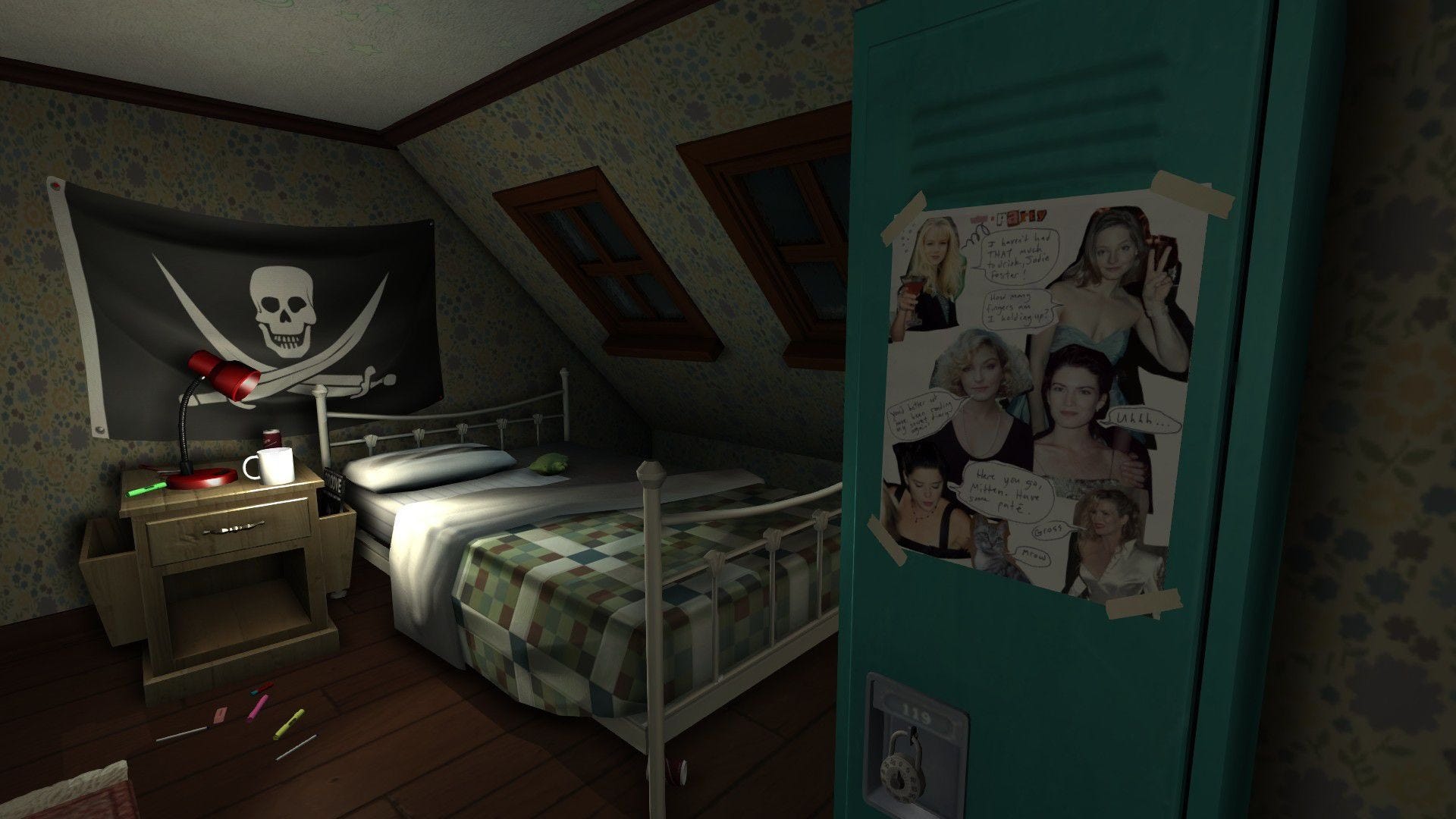
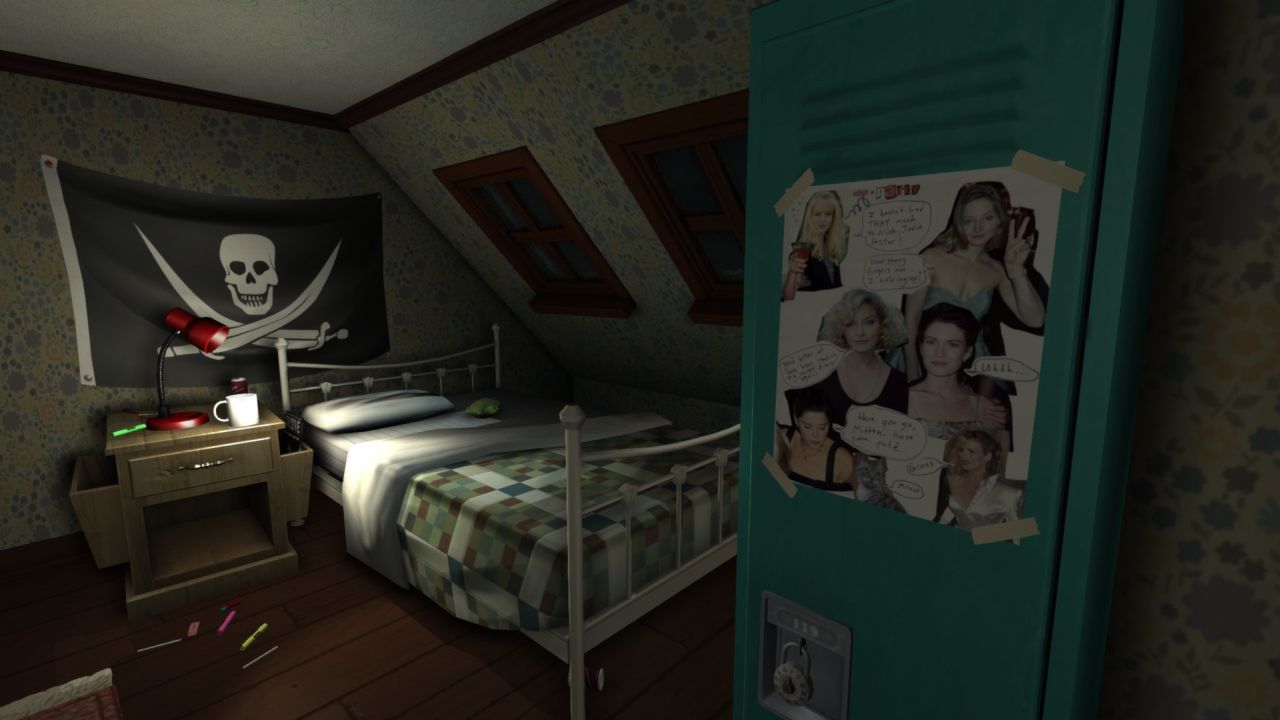
This connects to Gone Home in the sense that even though players might not have the personal experience of being part of the LGBTQ community, they can relate to the common teenage experiences which Sam experiences such as trouble with parents, feeling aimless in life, or being in a relationship. It's these experiences which are the true focus of the game, and its these fundamental human experiences which make it clear that identity as a whole is insignificant. - PJ and EL
This image connects to the passage by allowing players to view her experience but not live her life.
By emphasizing relatable experiences, the player is more able to feel connected to the characters and their struggles.