Four Corners 2
A video game player who attempts to “share” the feeling of a character represented on screen, especially when that feeling emerges from experiences of marginalization, is involved in affective appropriation. Under the banner of empathy, players are invited to visit the experiences of others, trying on their identities like foreign attire and turning their lives into novelty destinations. We might even say that the rhetoric of empathy promotes a colonizing of affect: an invasion, occupation, and subjugation of others’ experiences. (Ruberg 61)
Ruberg argues that when we place players in the shoes of marginalized identities, instead of helping them identify with the character, the players end up turning the character and by extension- the community into a costume by exoticizing the experiences. Using the "rhetoric of empathy"- the idea that by placing users in core experiences of queer/underrepresented groups, you evoke empathy in the general status quo- as a shield, these games infringe upon the experiences of marginalized communities and turn them into "novelty destinations" (61). Resisting this concept of "exoticizing the experiences" of marginalized groups, Gone Home uses its unique format to allow the player to understand an outside perspective rather than placing the player in the shoes of Sam herself. Through figuring out Sam's story a sense of relatability is created that reduces the foreign perspective of the story.
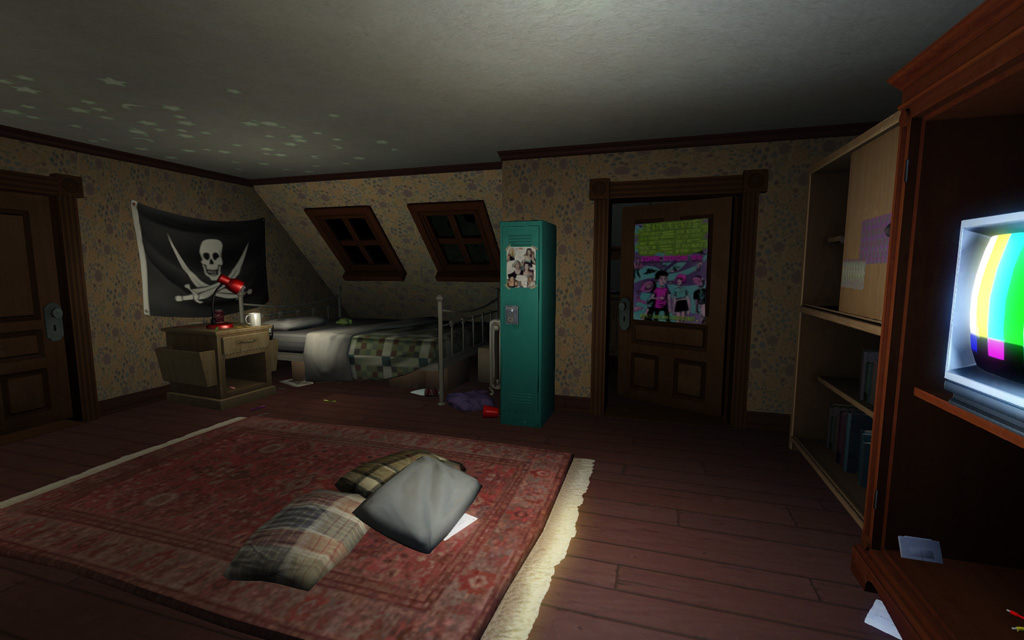
Figure 1
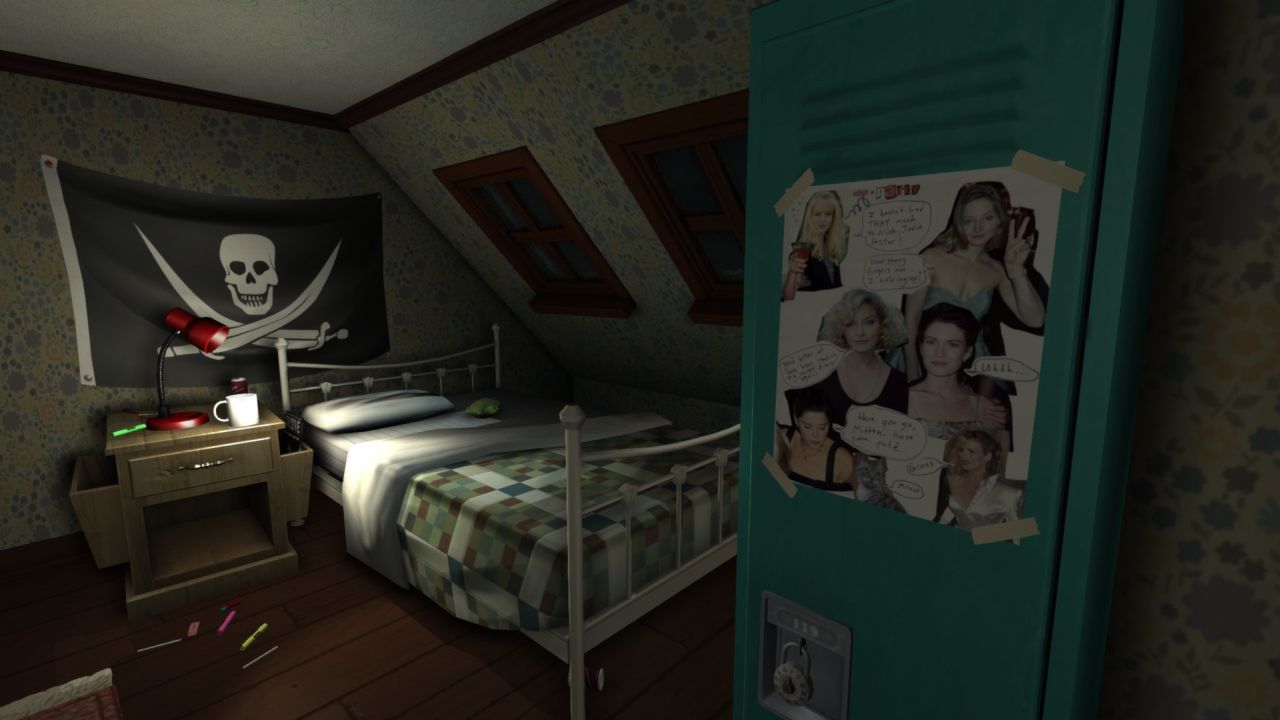
In utilizing the perspective of Katie and not Sam, the player is able to visit and interpret locations associated with Sam's coming of age, like her room (Figure 1), without the appropriation of her marginalized experience, something that could have happened should the POV have been a simplified rendition of a queer experience.