Four Corners 1
"What makes the rhetoric of empathy as it is applied to queer indie games (and other video games by, about, or for marginalized people) so problematic? First, as many of those who have condemned this rhetoric have pointed out, it minimizes the lives and identities of those who are seen as “different” or “other.” Although a video game may offer a glimpse into queer experience, for example, no game can replicate the fullness of lived queer experience or the real stakes of being a queer body in the world." (Ruberg 60)
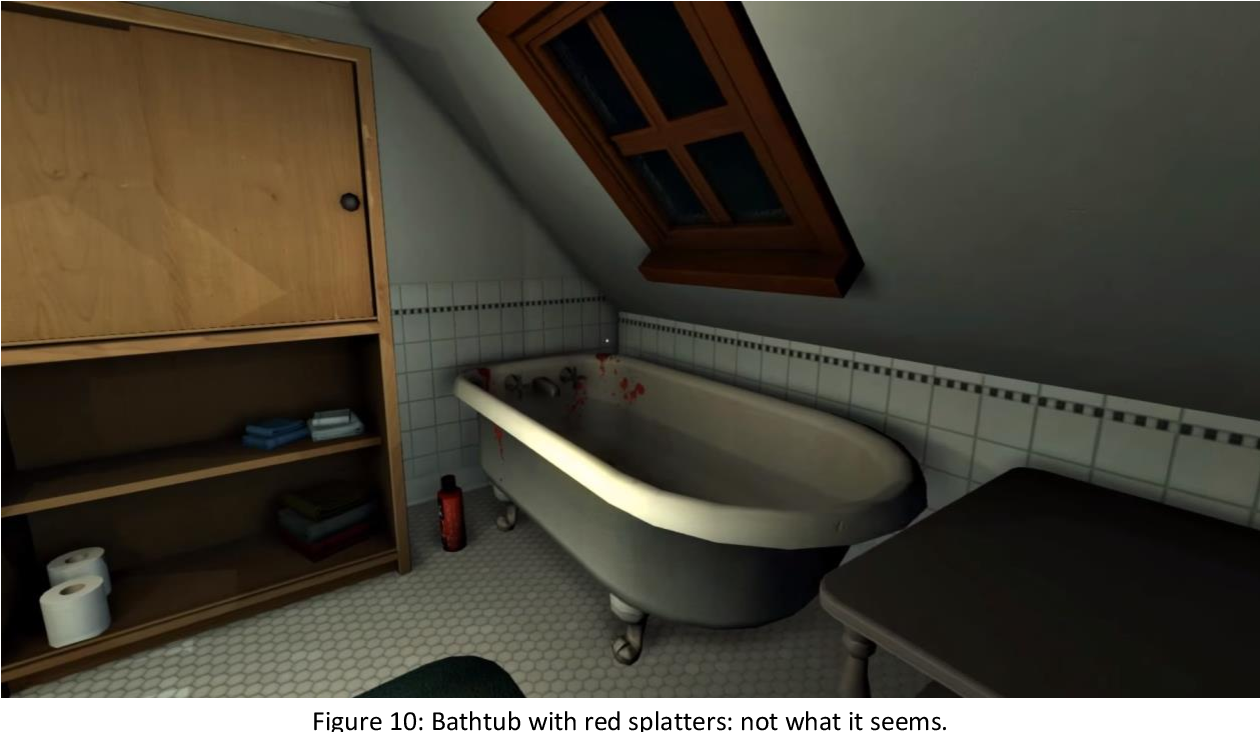
Ruberg argues that labelling games as empathy games trivializes the actual life experiences of marginalized groups. She states that games like these can't fully express the complex experiences of queer individuals or the difficulties they may experience on a daily basis (60). For example the narrative design of "Gone Home" organically portrays the story of Sam and her struggles with her queer identity. The bathtub in the game has a misleading red splash that when inspected, narrates Sam's struggles with following through intimacy and exploring her queer identity. In doing so, the game allows players to take in the perspective of someone struggling with their queer identity despite not portraying all the complex experiences of such marginalized groups.