This content was created by Uddalak Sarkar.
Gone Home Stickies
1 2026-02-24T23:24:13+00:00 Uddalak Sarkar 073927dfcfbd29b0da86aed23f0cc25a562556fb 264 1 plain 2026-02-24T23:24:13+00:00 Uddalak Sarkar 073927dfcfbd29b0da86aed23f0cc25a562556fbThis page is referenced by:
-
1
2026-01-25T20:36:20+00:00
Four Corners 2
17
Collaborative exercise in building arguments
plain
2026-02-24T23:34:34+00:00
Leading quotation:
A video game player who attempts to “share” the feeling of a character represented on screen, especially when that feeling emerges from experiences of marginalization, is involved in affective appropriation. Under the banner of empathy, players are invited to visit the experiences of others, trying on their identities like foreign attire and turning their lives into novelty destinations. We might even say that the rhetoric of empathy promotes a colonizing of affect: an invasion, occupation, and subjugation of others’ experiences. (Ruberg 61)
Summary: Ruberg essentially argues that when players insist stories involving people of marginalized communities are made for them to empathize with or find entertainment in, they strip these games of the unique experiences which act as the culmination of these groups' self expression, effectively "colonizing" these experiences (61). Although Ruberg makes the claim that games that are centered around the experiences of those in marginalized communities are harmful, it can be shown that “Gone Home” does not take Sam’s story and reshape it to devalue and colonize her experiences, but rather the game takes the opportunity to display Katie’s point of view, an individual who is essentially an outsider to the events going on within her own home and family. RC LB SD KC
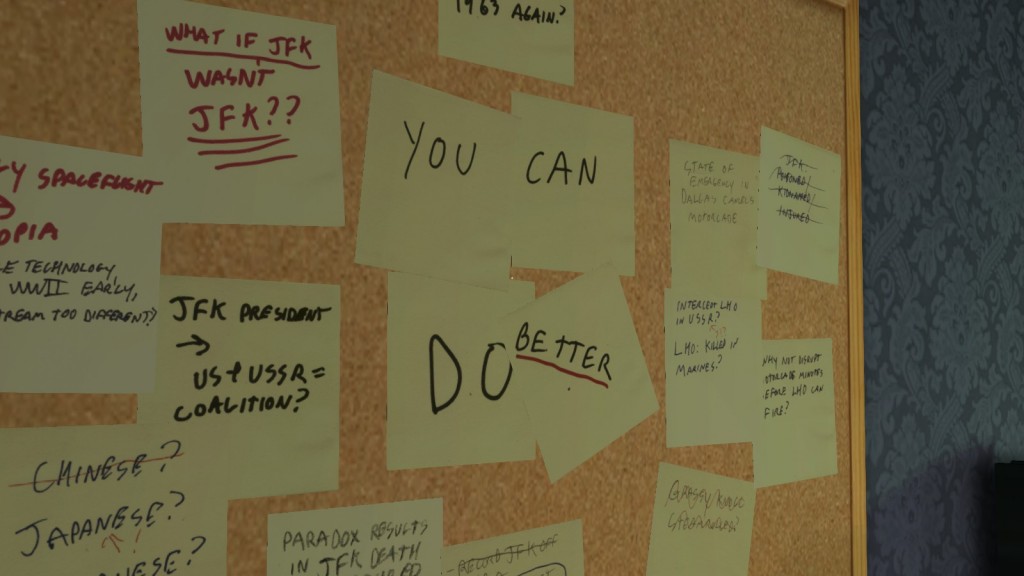
Image depicts sticky notes on a corkboard outside of Sam's room in Gone Home. Depicting "YOU CAN DO BETTER". We are learning about Sam's lived experiences through these sticky notes.
This warns the players against projecting their own experiences onto others and in Gone Home, we see it as an example of this from an outsider perspective of Kaitlyn.