This content was created by Pierce Josselyn.
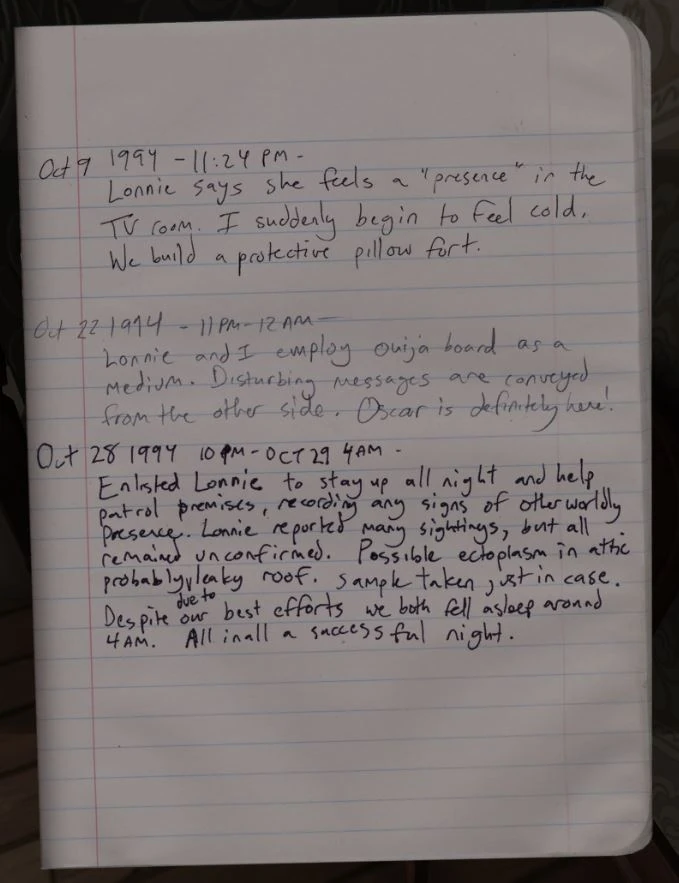
Ghost hunting
1 2026-02-24T23:27:26+00:00 Pierce Josselyn 9b271c3ea5b417bbfad767de8f4759fedaf7fd7b 264 1 plain 2026-02-24T23:27:26+00:00 Pierce Josselyn 9b271c3ea5b417bbfad767de8f4759fedaf7fd7bThis page is referenced by:
-
1
2026-01-25T20:36:20+00:00
Four Corners 4
10
Collaborative exercise in building arguments
plain
2026-02-24T23:33:27+00:00
Leading passage:It is time to start calling the emotions and experiences that currently cluster under the umbrella term “empathy” by their names. Out in the open, without the cover of empathy as a catchcall buzzword, sympathy, depth, and allyship become more visible and therefore more accessible for critique. Caring, compassion, sorrow, loss, and queer entanglement are powerful concepts that deserve to be spoken out loud, not lost in the rhetoric of empathy. . . . More valuable than a video game that allows players to identify with someone else is a game that requires players to respect the people with whom they cannot identify. (Ruberg 68)
Bonnie Ruberg argues that the word "empathy" alone fails to describe the other complex emotions like "compassion" and "sorrow" that arise when playing video games. She also argues that being able to respect those whom we struggle to identify with in a video game is more important than being put into the shoes of someone more easily relatable (68). Sam's story in Gone Home parallels this idea by making the player feel compassion for Sam as she struggles with identifying her feelings towards Lonnie. Throughout the game, Sam has been experiencing a wide variety of emotions that we as the player get to see develop, allowing us to understand the complexity of Sam's character beyond stepping into her shoes. For example, by navigating the house, we see in real time Sam's relationship with Lonnie develop from a simple friendship to something more of a romantic relationship, allowing us to understand Sam beyond being empathetic. - J.M., R.N., G.P., J.O. The image was a note Sam wrote where she's documenting her ghost hunting adventures with Lonnie as they get closer. Contrary to Ruberg’s argument, the game “Gone Home” allows the player of the game to feel compassion that is both respectful and understanding of Sam’s lived experiences.