Four Corners 1
"What makes the rhetoric of empathy as it is applied to queer indie games (and other video games by, about, or for marginalized people) so problematic? First, as many of those who have condemned this rhetoric have pointed out, it minimizes the lives and identities of those who are seen as “different” or “other.” Although a video game may offer a glimpse into queer experience, for example, no game can replicate the fullness of lived queer experience or the real stakes of being a queer body in the world." (Ruberg 60)
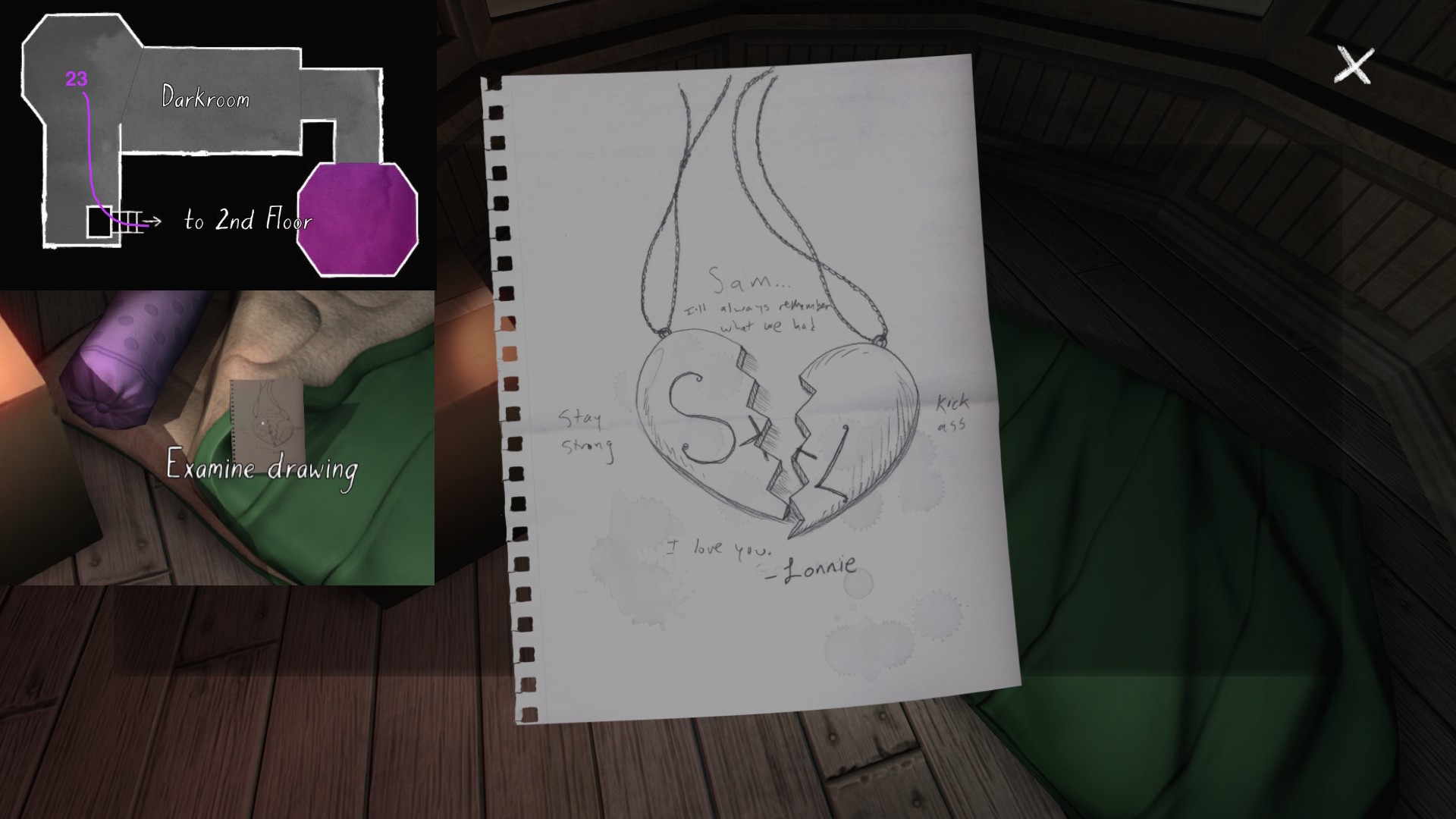
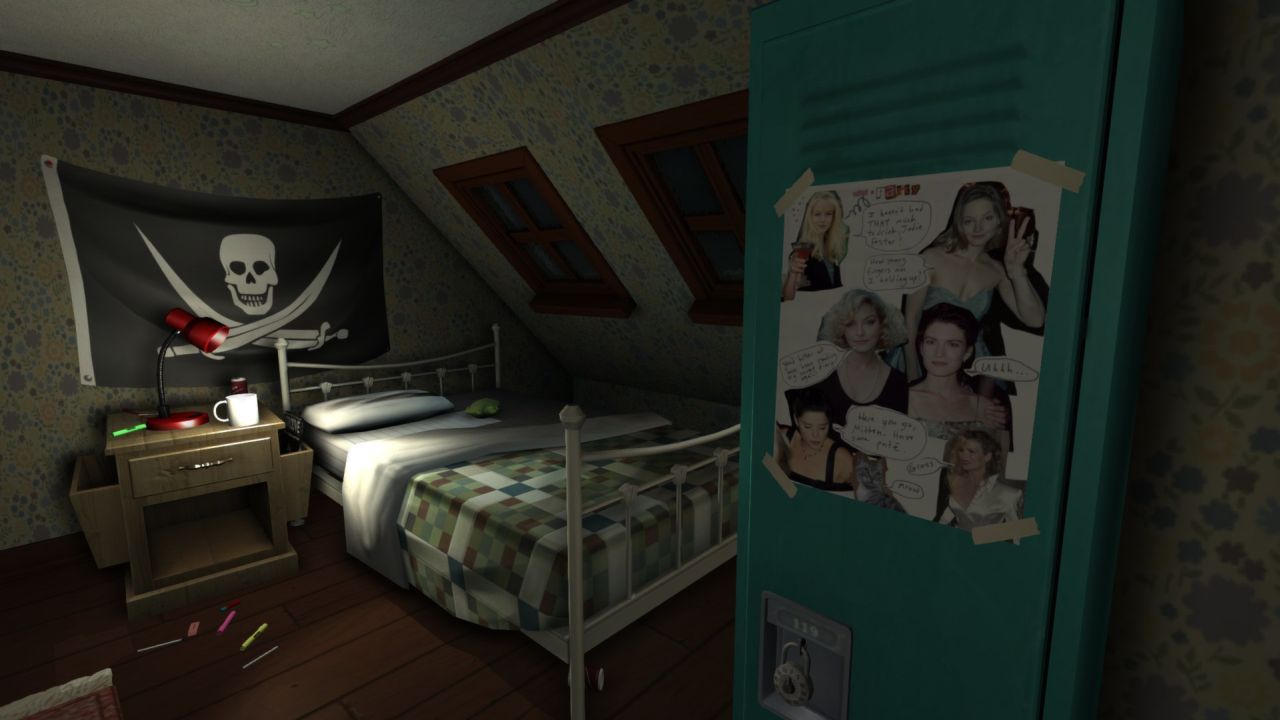
Ruberg emphasizes the negative usage of empathy in relation to queer games. The application of the "rhetoric of empathy," which they criticize for appropriating the experiences of marginalized groups, belittles the lives of queer individuals by showing only a part of their struggles (60). One game involving this dichotomy of understanding is Gone Home, involving the queer experience as shown from a bystander's perspective. Within the story, you only see Sam's experiences through short journal entries, limiting the player's view into Sam's life and queer identity. Due to this, the player is not able to truly empathize with Sam's identity, and as such calling it an empathy game takes away from the meaning of the story.
This is demonstrated in the image, which shows how the player does not understand the extent of Sam's relationship by simply viewing this drawing. Despite the players seeing the vague outlines of Sam's story, they can't exactly experience her life. All in all, while an approximation of another lived experience can be reached through the consumption of media focused on their topic, it is impossible to truly understand in depth what a person lives through in this manner.